Introduction
If you know me at all, you know I’m going to plan a trip around the sights, the activities, the hiking…and the food.
Definitely the food. 🙂
So yes, going to Peru meant hiking the Inca Trail, seeing Machu Picchu, climbing Huayna Picchu and visiting Rainbow Mountain.
But it also meant I had nearly two weeks to try Peruvian food, local beer, cocktails, street food and anything else that looked “interesting.”
And unlike my husband, I consider “interesting” a very good word when describing food.
Peru did not disappoint.
Starting where all good research begins: the airport
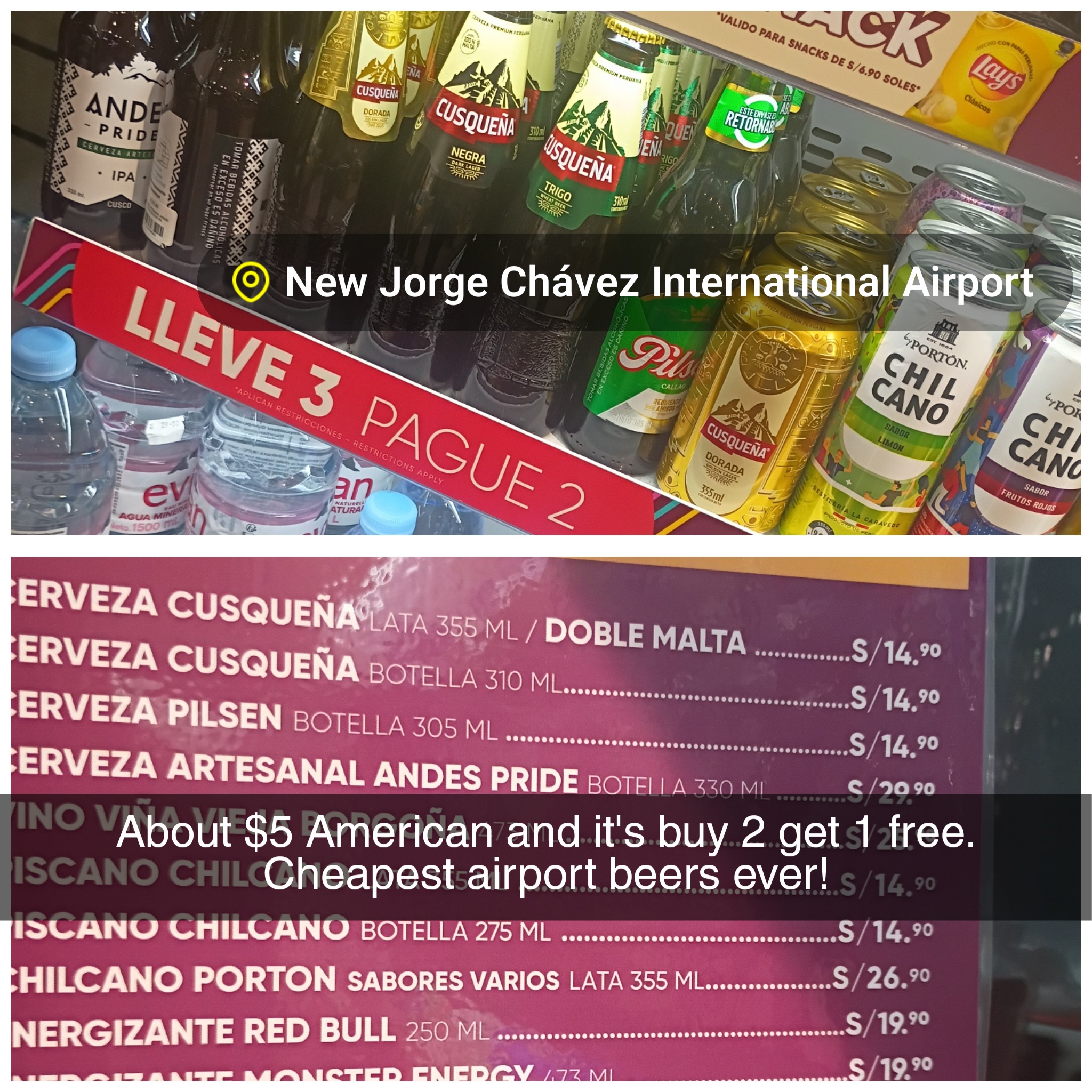
My first Peruvian food-and-drink experience technically happened before we ever got to Cusco.
Beer.
At the Lima airport.
Because after flying from Phoenix to Los Angeles and then overnight to Peru, it seemed like an entirely reasonable way to begin.
This also established what would become an important pattern for the trip:
Travel somewhere.
Walk somewhere.
Climb something.
Eat.
Drink.
Repeat.
I could probably market this as a wellness program.
First stop: Cusco
Our first real introduction to Peru was Cusco, which sits at about 11,000 feet above sea level.
We had been warned to take it easy while we adjusted to the altitude.
Apparently “take it easy” can include eating and drinking your way around town.
At least that’s how I interpreted it.
Cusco was where I realized food was going to be a major part of this trip. Restaurants were tucked into old stone buildings, markets overflowed with things I didn’t recognize, and menus offered ingredients I had never tried.
Of course I wanted to try almost all of them.
Almost.
I drew the line at guinea pig.
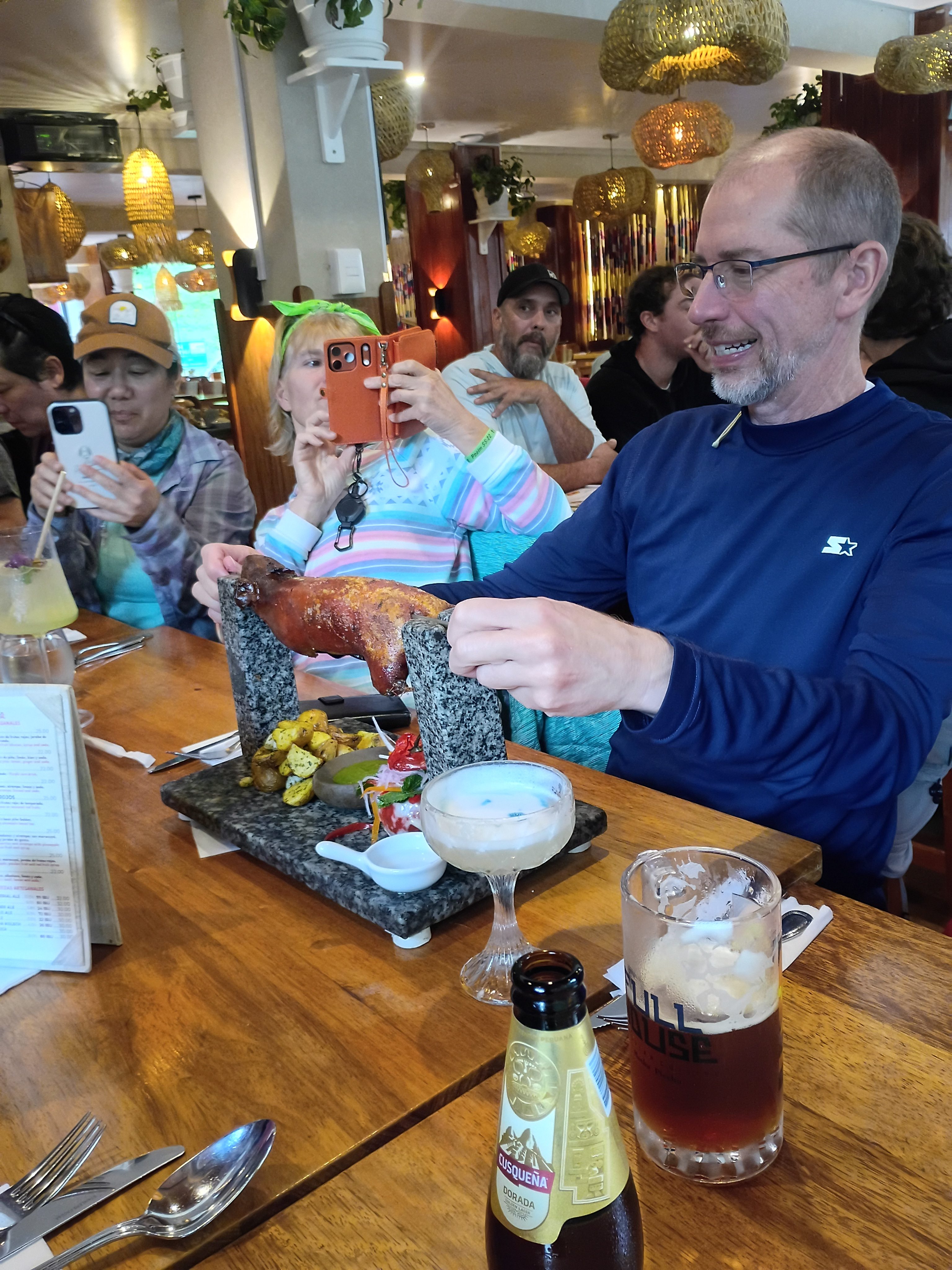
Several people in our group tried it, and I watched with considerable interest from a safe distance.
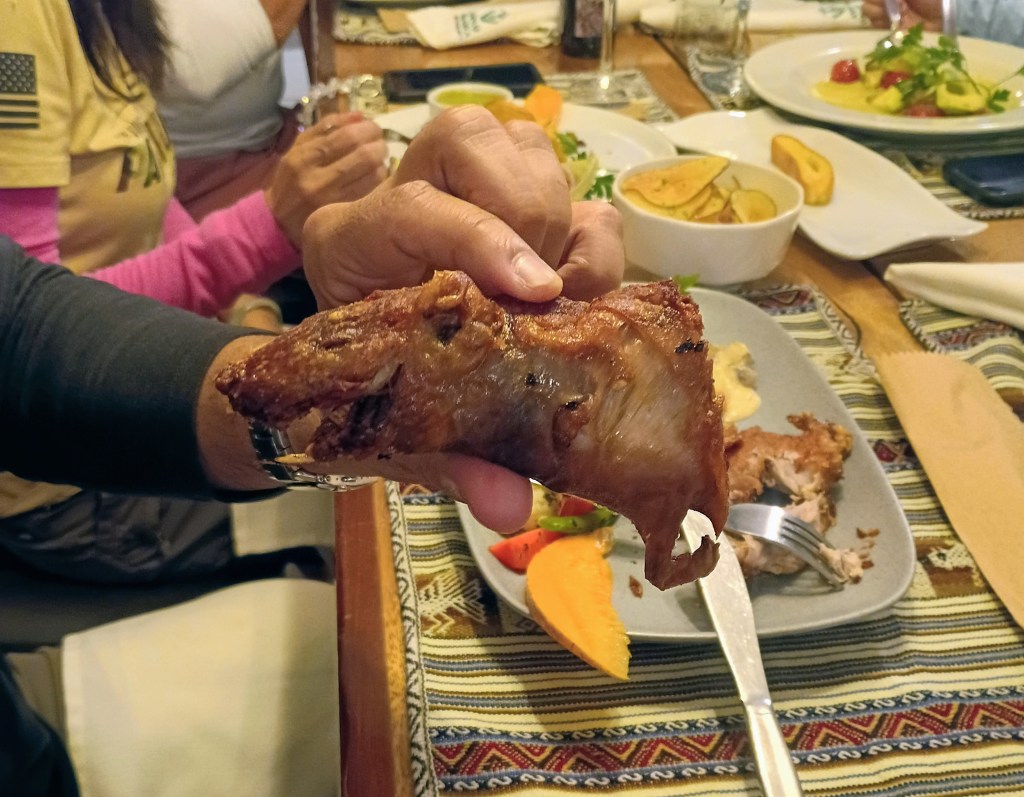
Given another day or two, I might have worked up the nerve to try a bite.
Maybe.
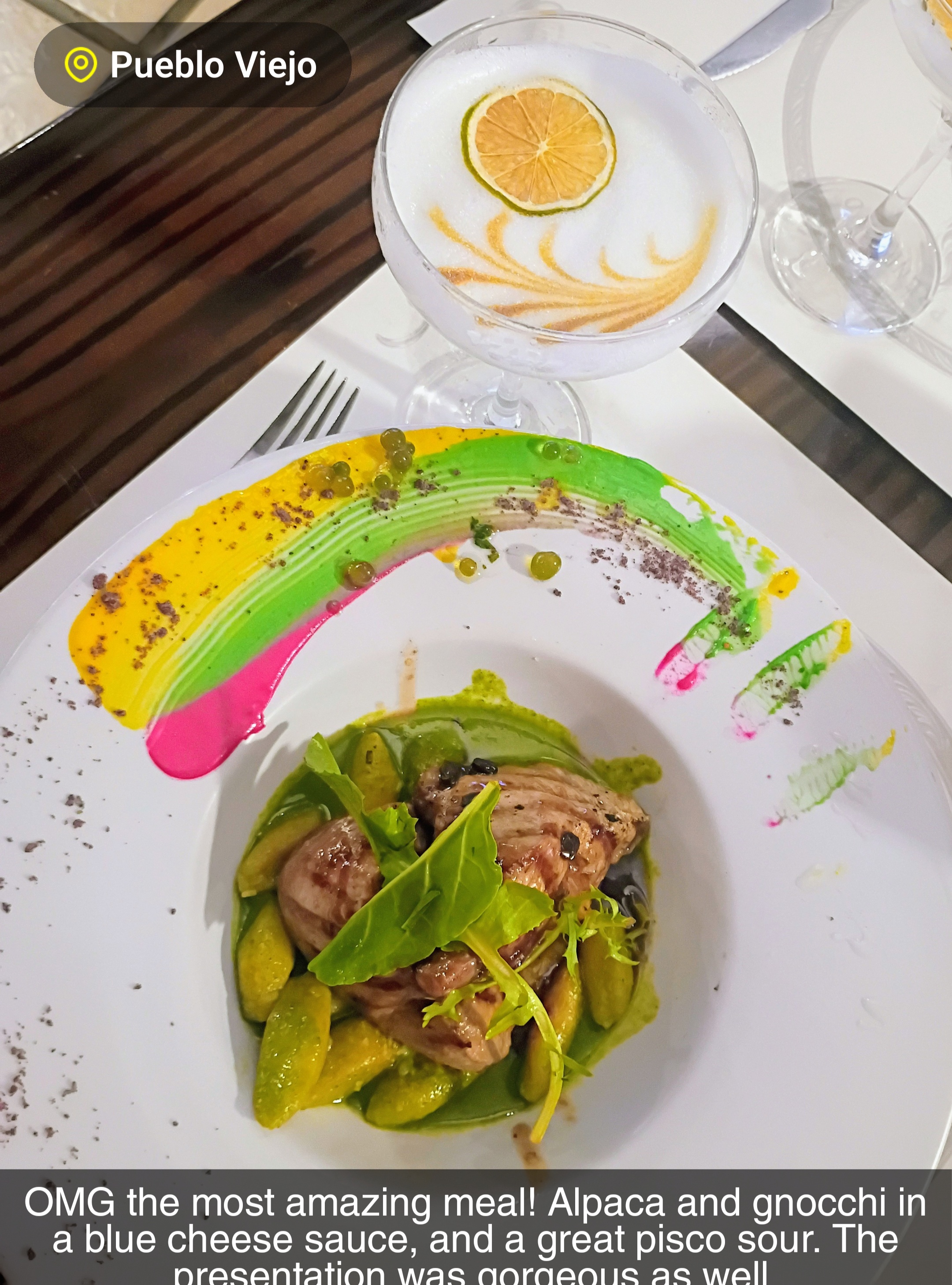
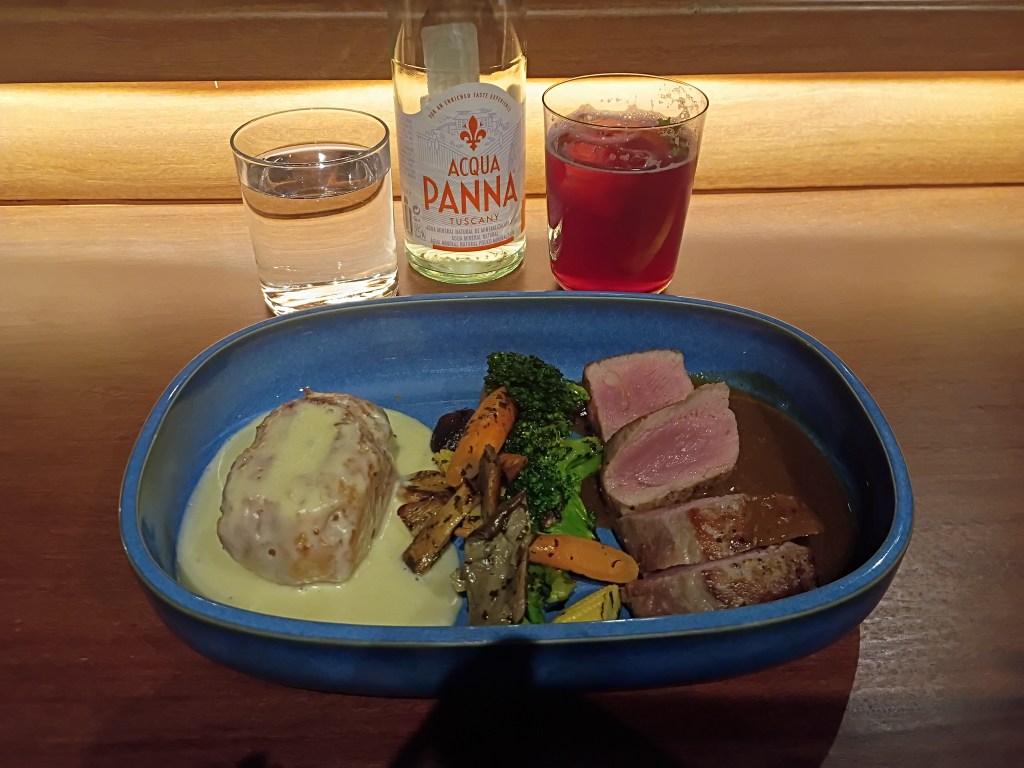
One food I definitely wanted to try was alpaca.
I’ve eaten plenty of wild game and unusual meats over the years, so alpaca didn’t intimidate me at all. It was lean, mild and really good.
And yes, I realize there is something slightly uncomfortable about spending part of a trip taking pictures of adorable alpacas and another part eating one.
Travel is complicated. 🙂
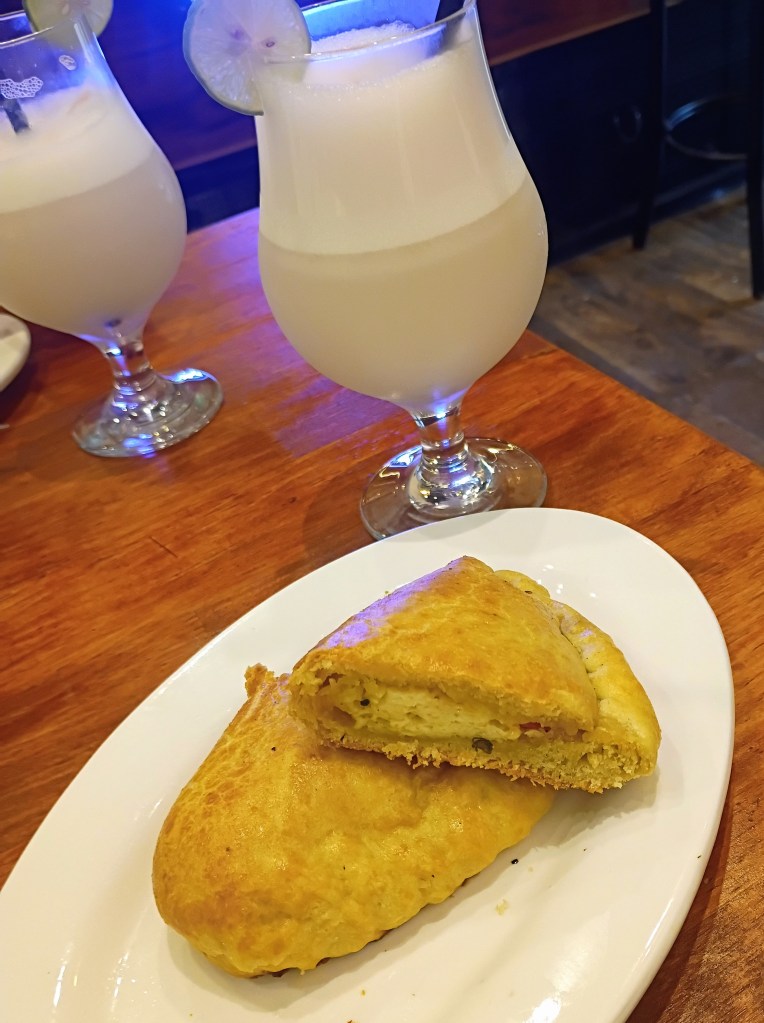
Empanadas quickly became another favorite.
They’re exactly my kind of travel food: portable, filling and capable of holding all kinds of good things inside.
I would happily have conducted considerably more empanada research if the itinerary had allowed it.
Important research: Pisco Sours
Now we need to discuss one of my more serious objectives for this trip.
Pisco Sours.
Somewhere early in the trip, I decided it would be irresponsible to visit Peru and form an opinion about its national cocktail based on a single sample.
Clearly this required research.
Extensive research.
In multiple locations.
For accuracy. 🙂
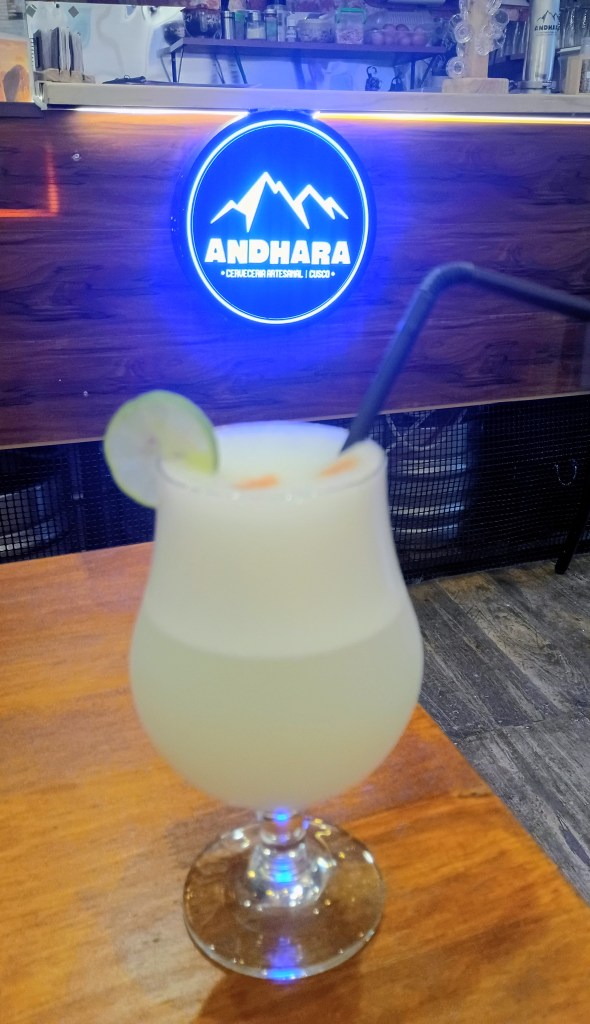
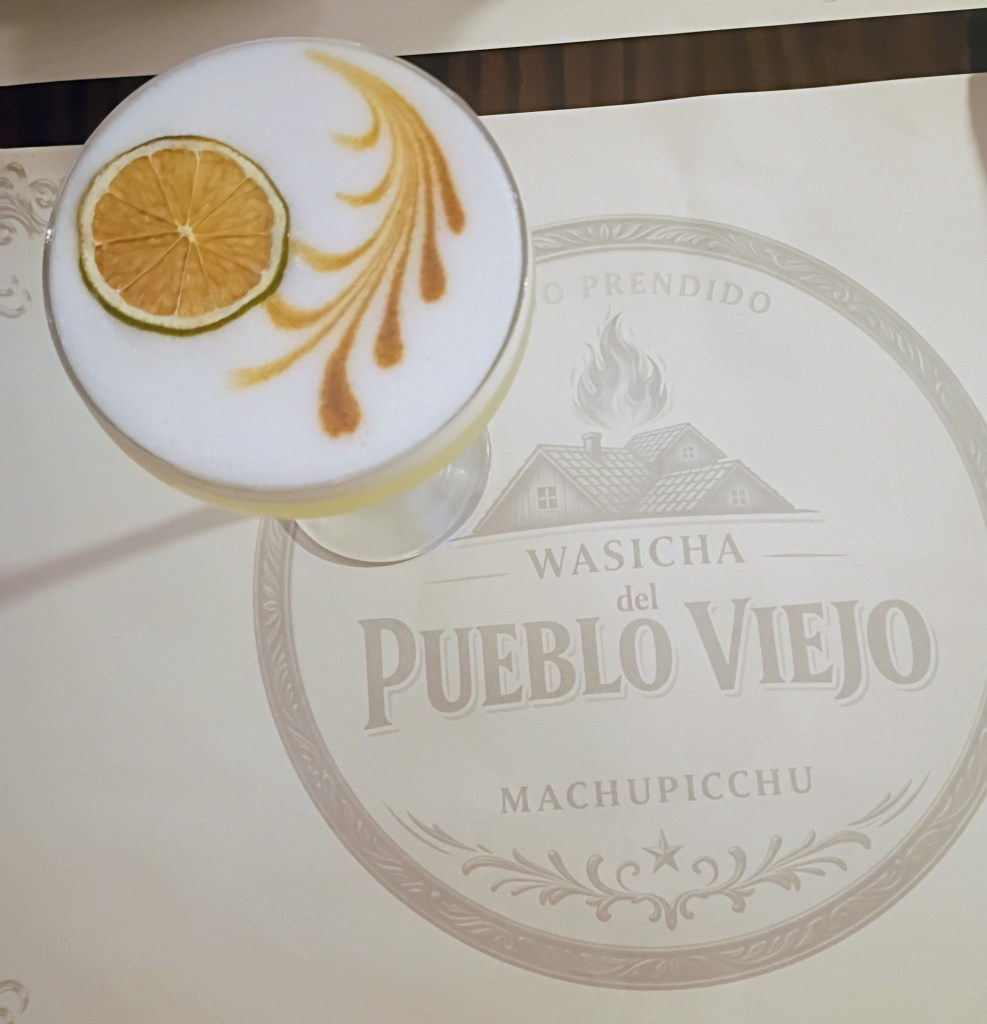
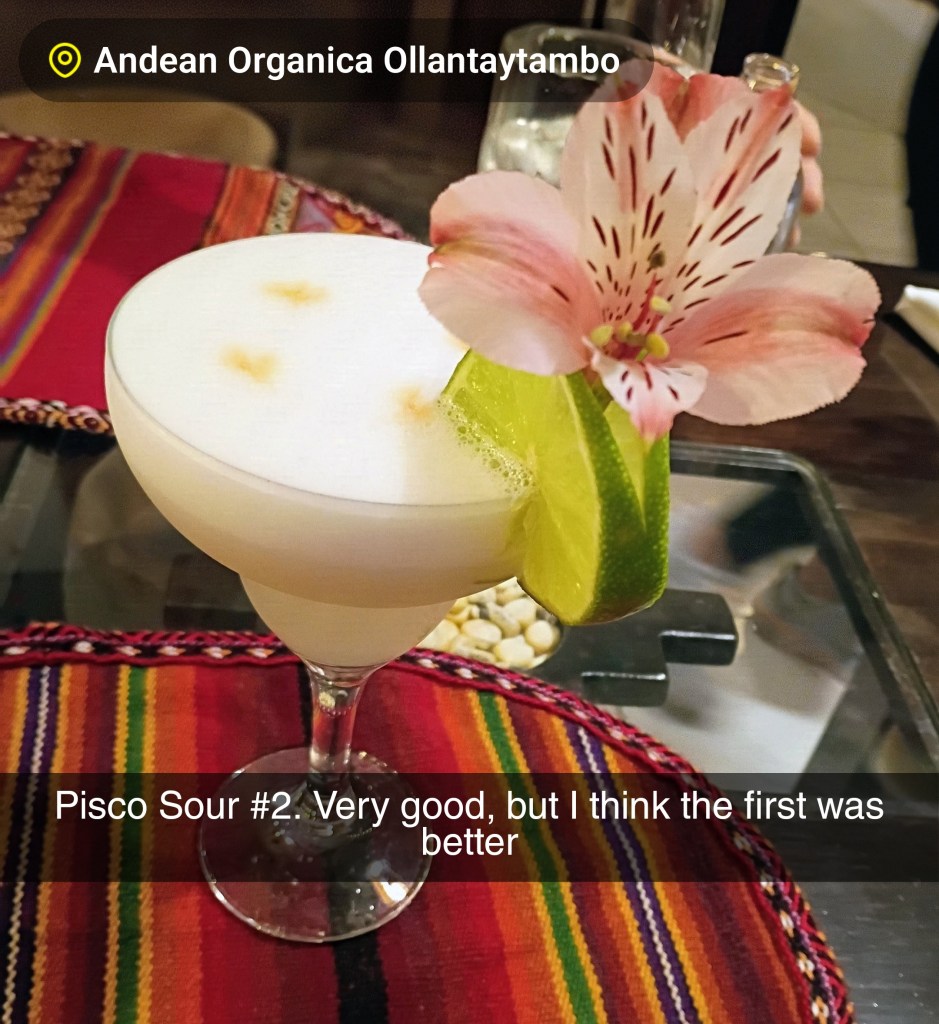
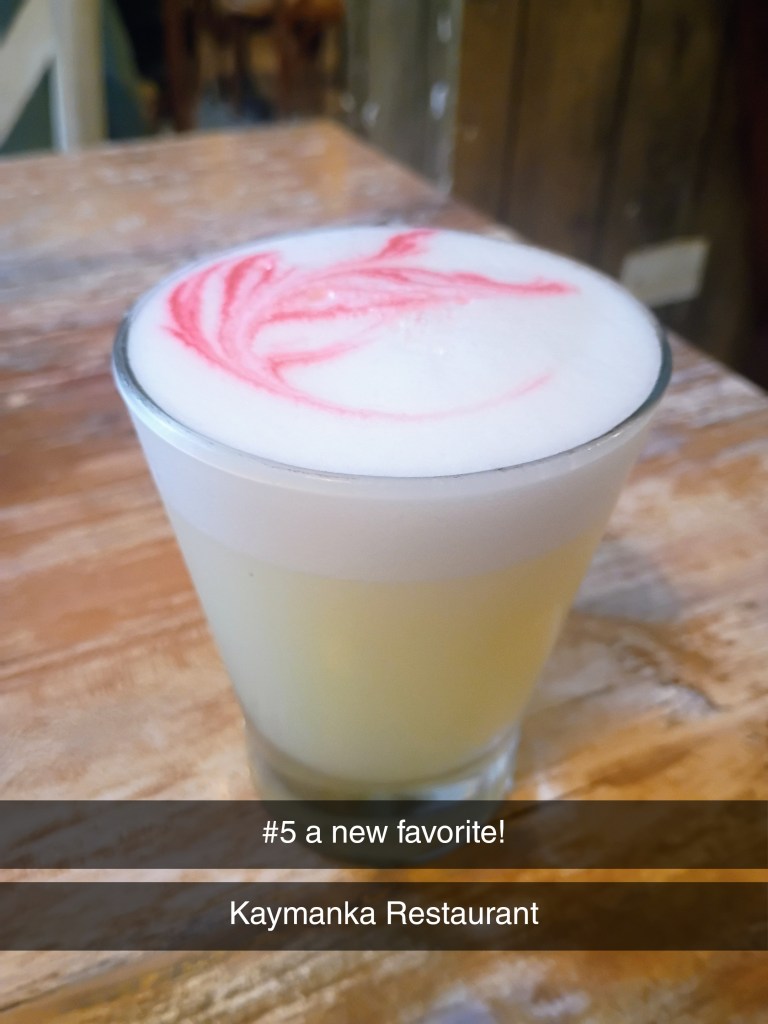
And they really were different.
Some were sweeter.
Some more tart.
Some stronger.
Some creamier.
Some were beautifully presented.
And I definitely developed favorites.
Thankfully, I tagged many of the photos by location, which means this was not simply drinking cocktails.
It was documentation.
Very responsible of me.
Coca: tea, leaves, gummies and 4 a.m. wake-up calls
Coca was everywhere in Peru.
Hotels had large pots of coca tea in the lobby. Shops sold coca candy, gummies and tea. Guides recommended the tea as a traditional way of helping visitors cope with the altitude and get a little energy.
And on the Inca Trail, coca became part of our morning routine.
Every morning—usually around 4 a.m., and 3 a.m. on the final day—the porters would knock on our tent and set two steaming cups of coca tea inside.
Honestly, there are worse ways to wake up when you know another day of Inca stairs is waiting outside.
The porters also chewed the leaves directly, tucking a bunch into one cheek.
Watching them reminded me of the way some Americans tuck chewing tobacco into their lip—different plant, different culture, but a surprisingly similar-looking habit.
Our guide even showed us artwork where you could see Incan influence in the way some men were painted with one cheek slightly puffed out and reddish from holding coca leaves there.
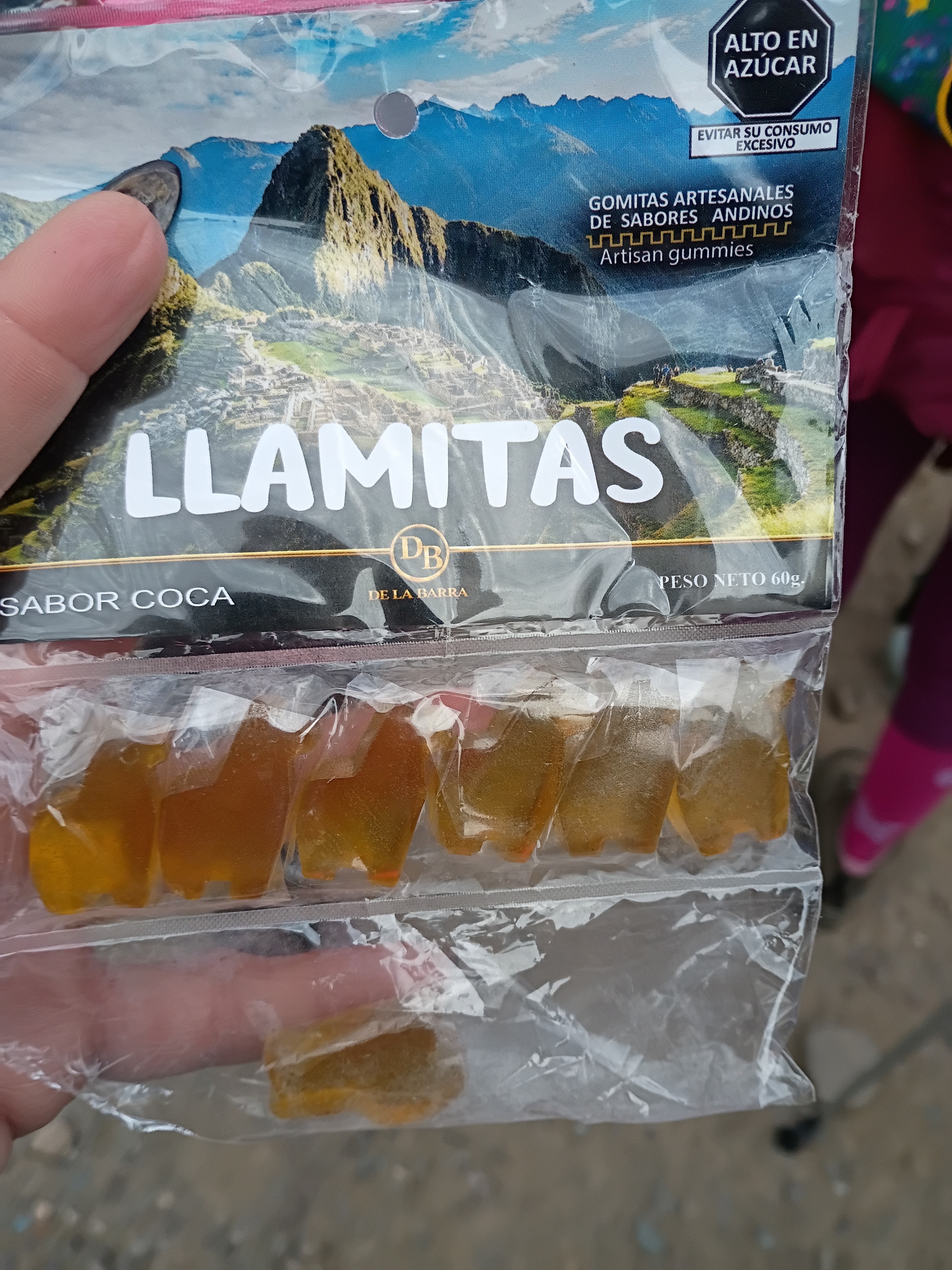
I didn’t chew the leaves, but I drank the tea and ate coca gummies throughout the trail.
At altitude, I was willing to accept all available assistance.
We were also warned that coca could cause problems for people subject to workplace drug testing and were strongly cautioned not to try bringing the leaves home.
So I left the leaves in Peru.
The gummies, however, were quite handy while hiking.
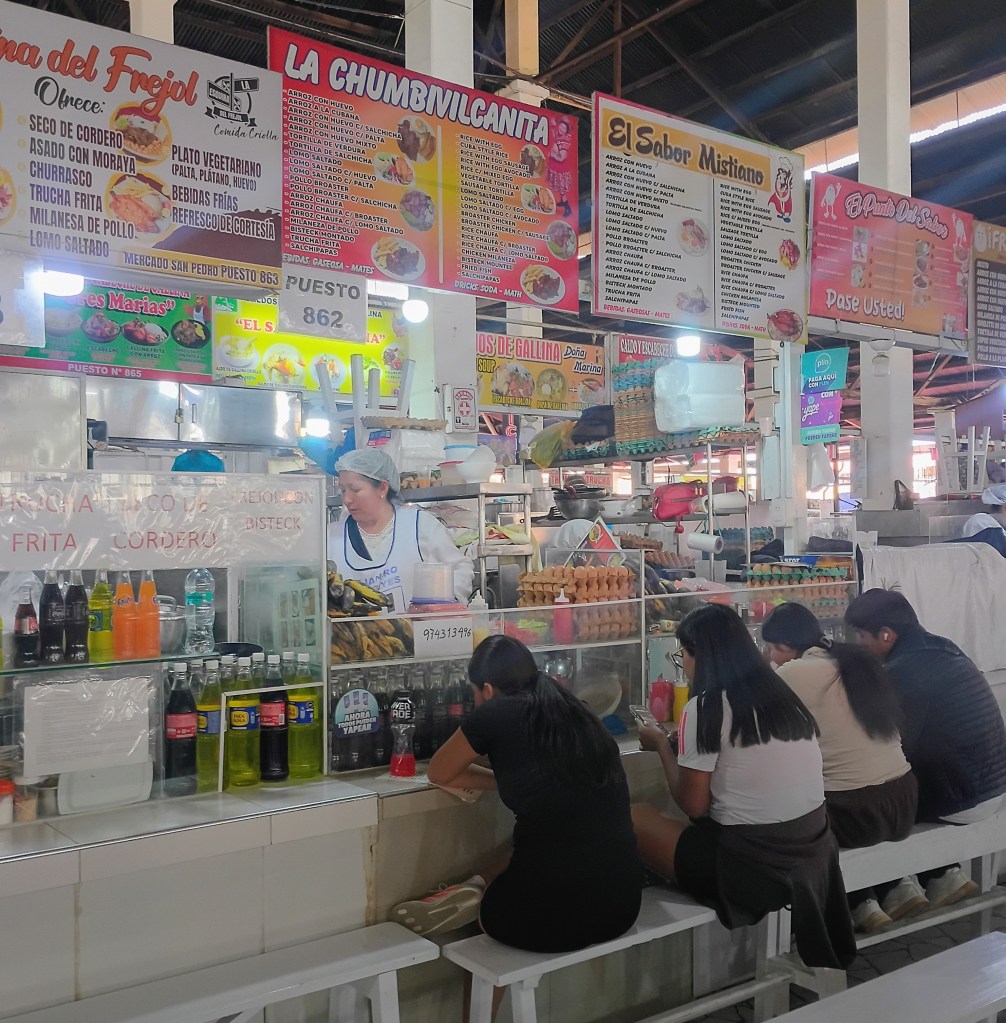
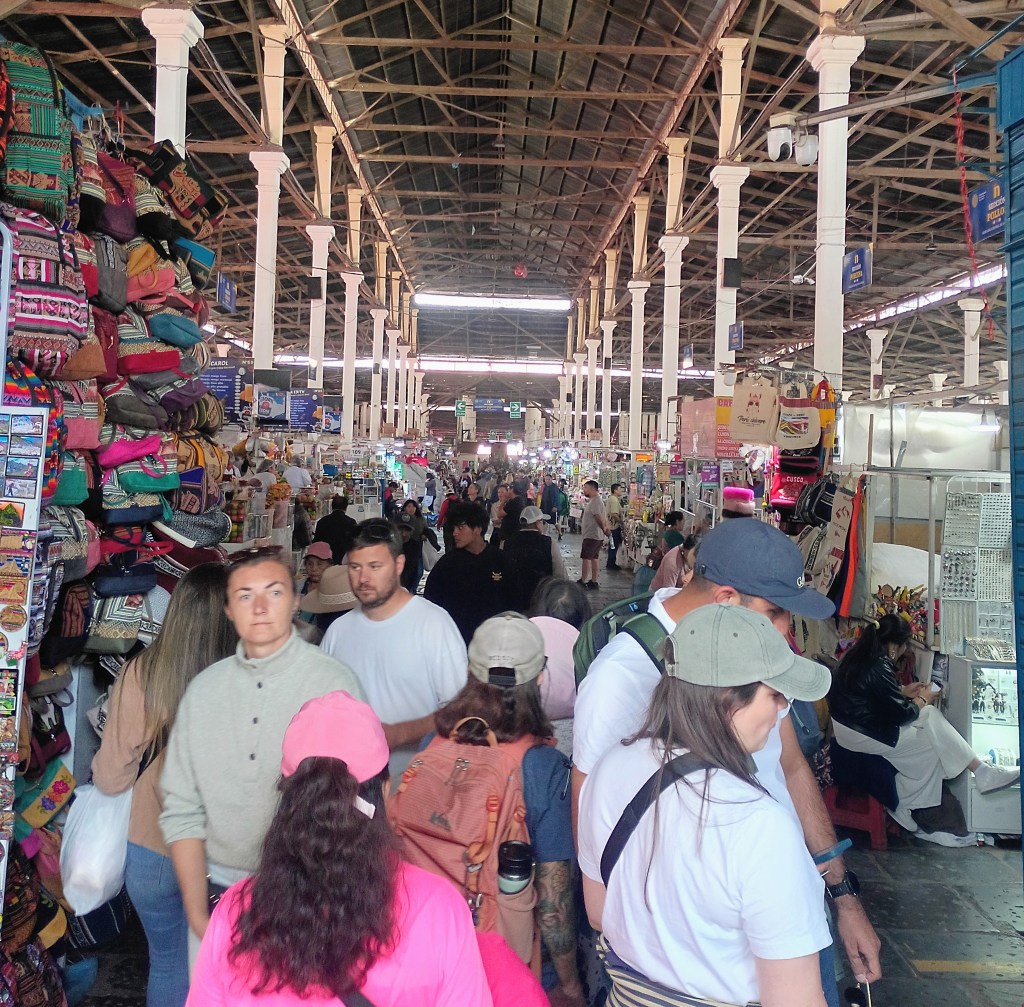
The markets may have been as much fun as the restaurants
One of my favorite food experiences in Cusco wasn’t a restaurant at all.
It was the market.
This is where I could have spent HOURS.
Meat.
Bread.
Grains.
Potatoes.
Corn.
Fruit.
Vegetables.
Spices.
Prepared food.
Everywhere you looked there was something different.
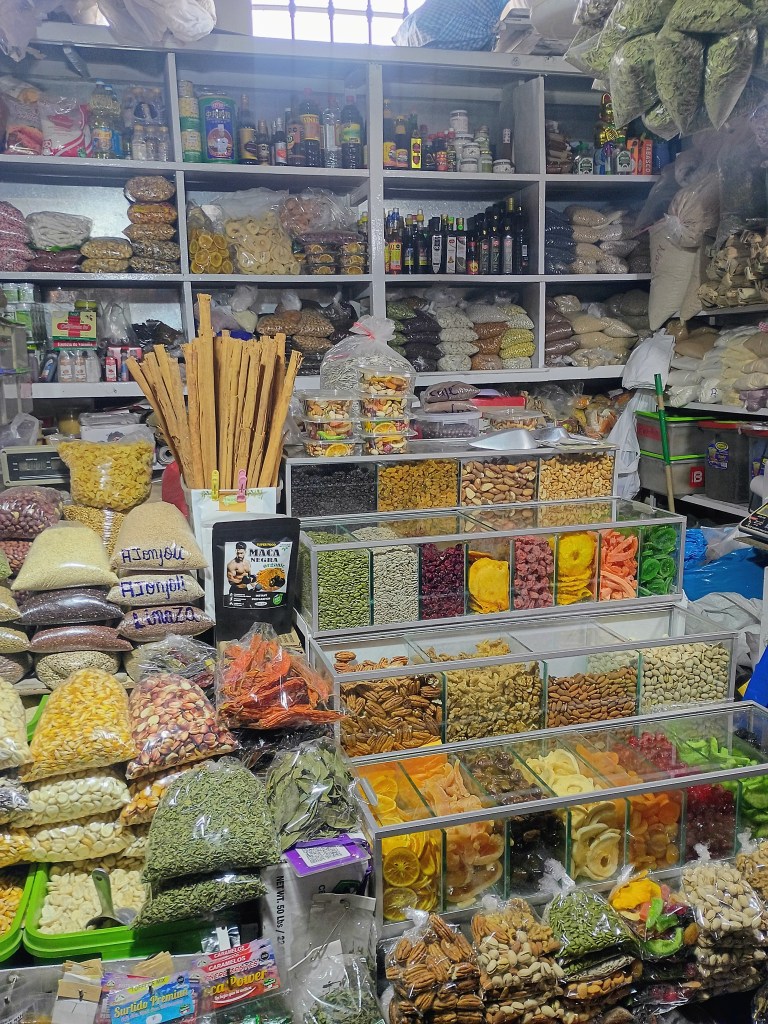
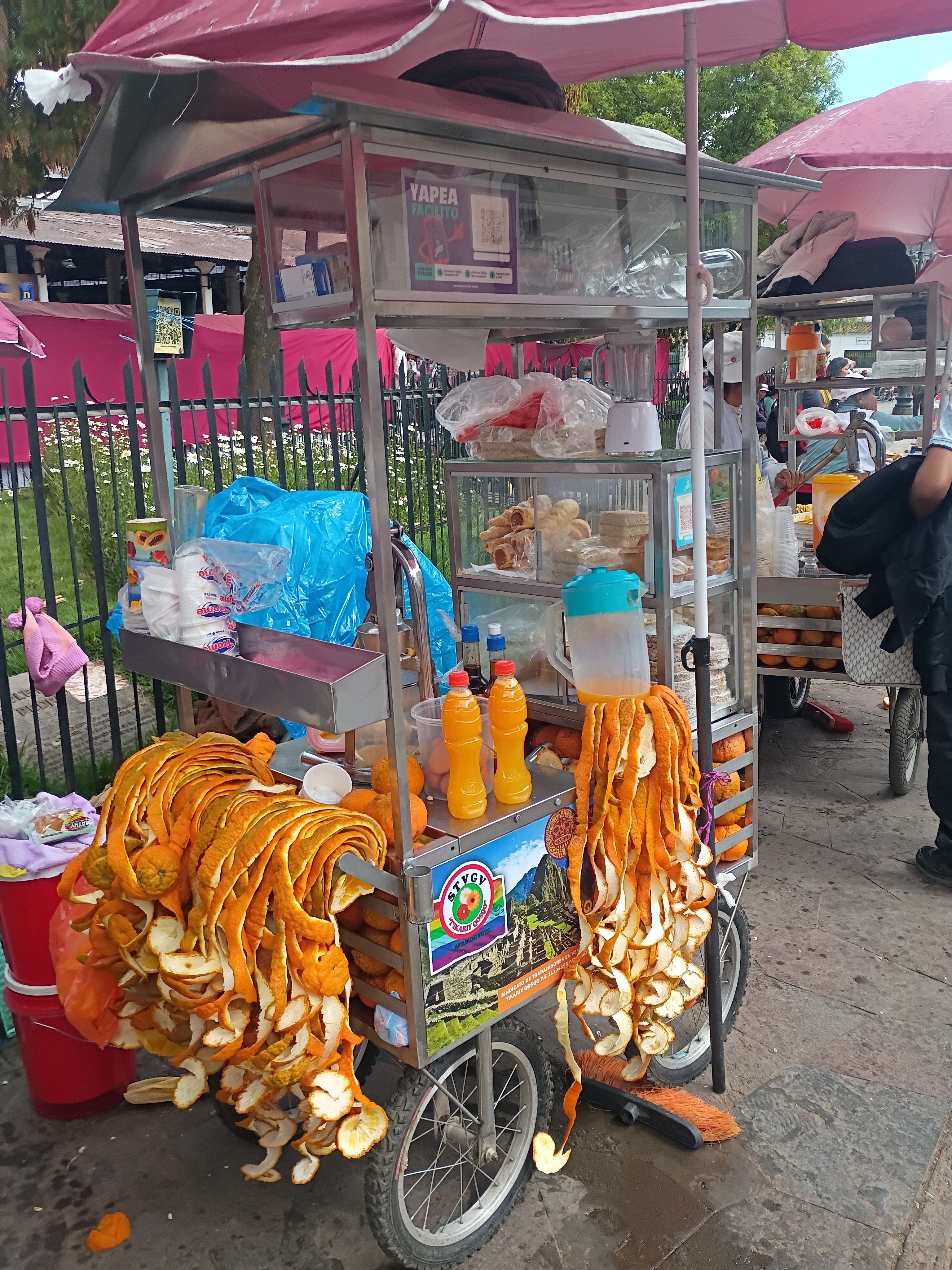
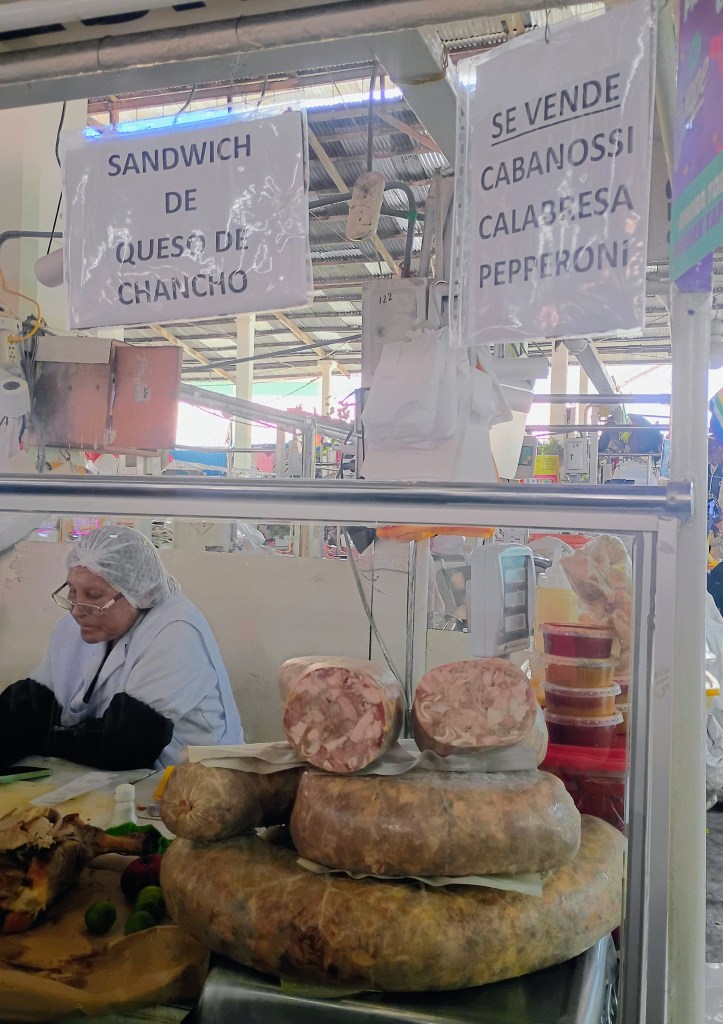
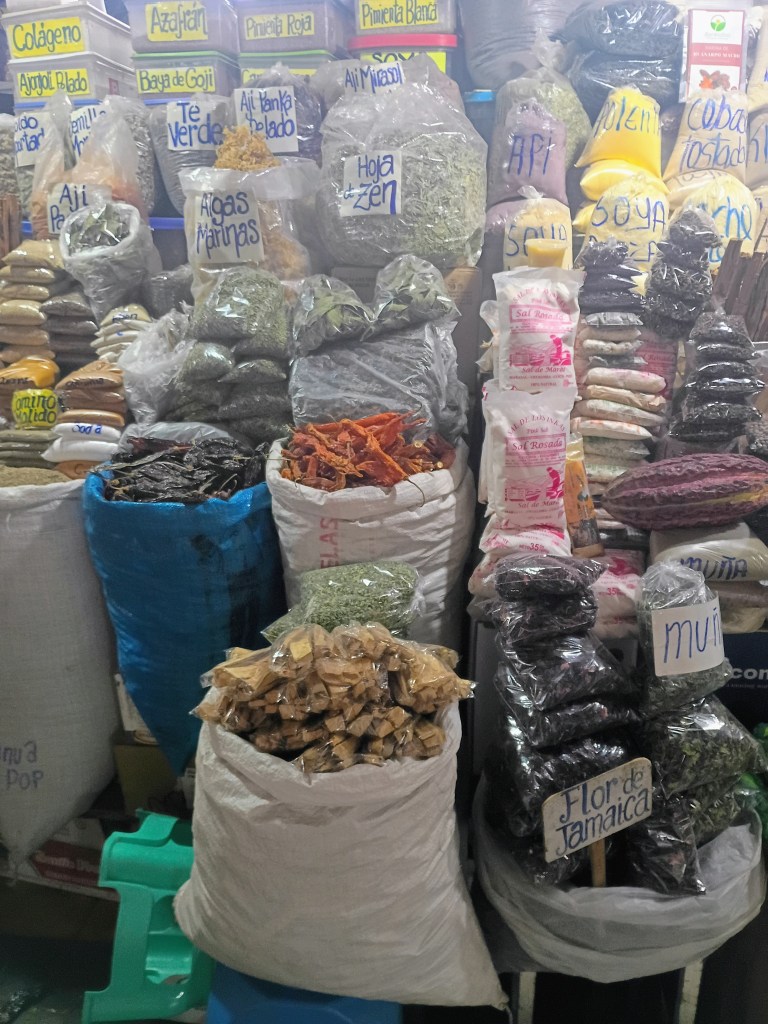
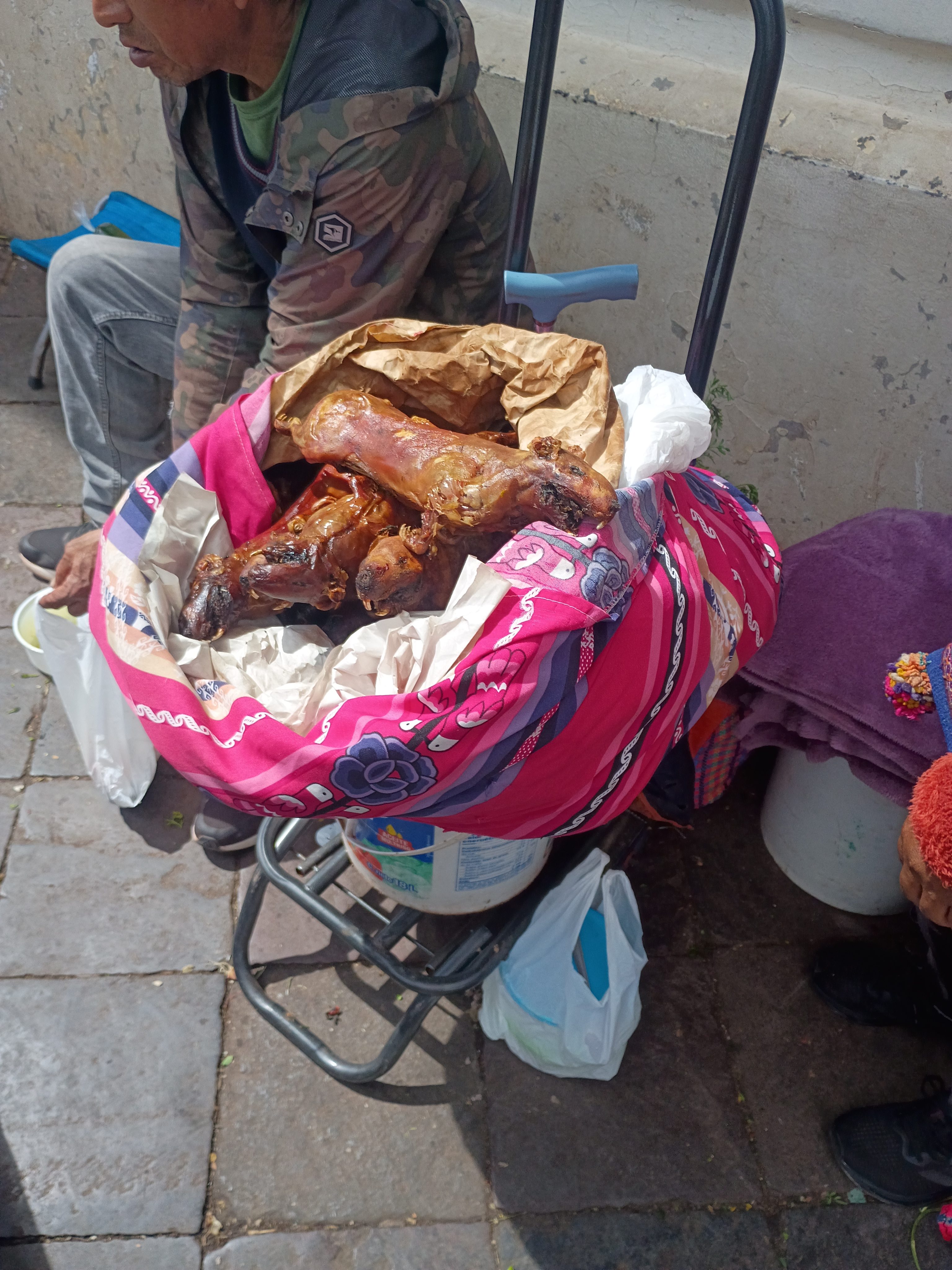
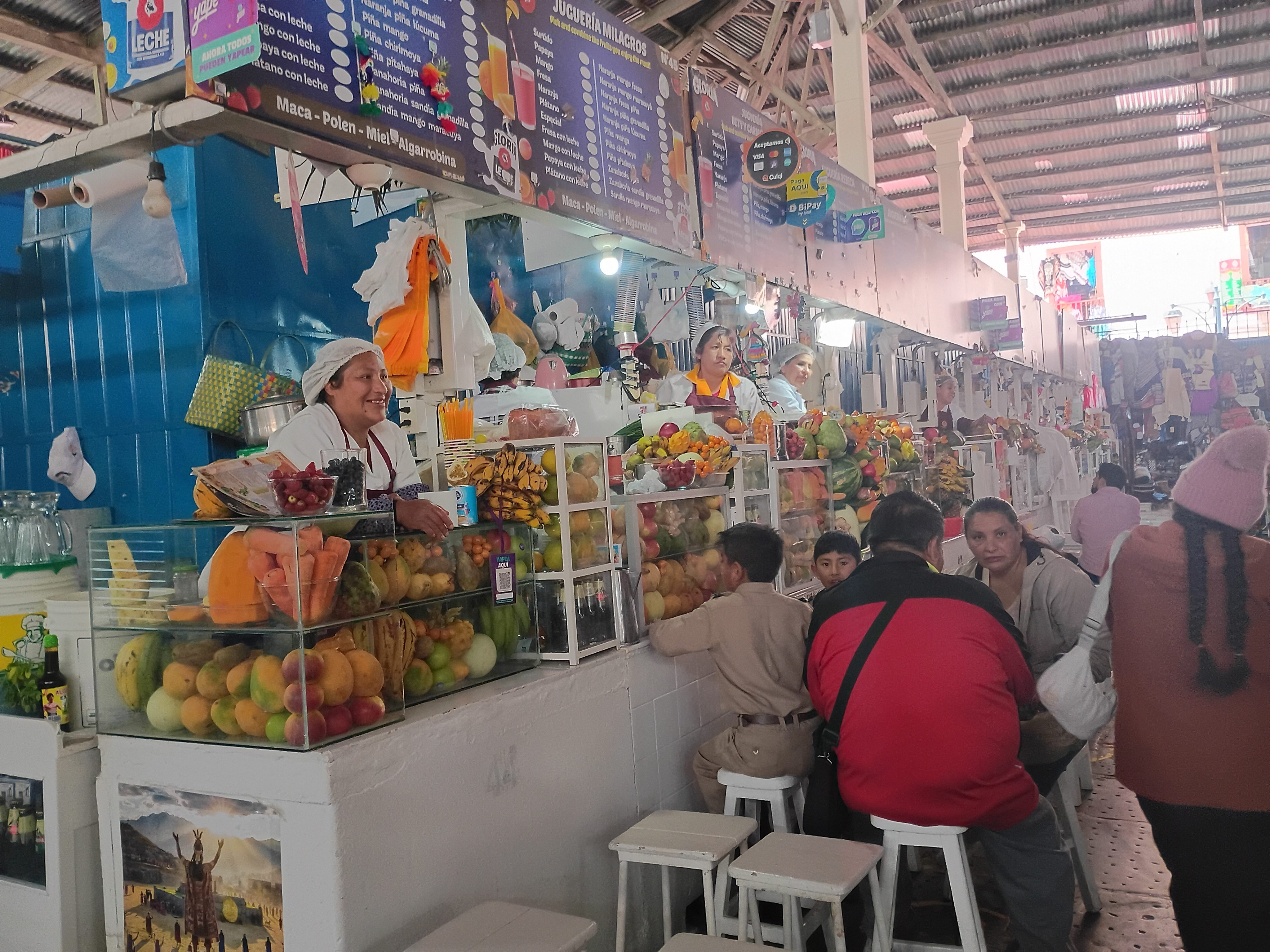
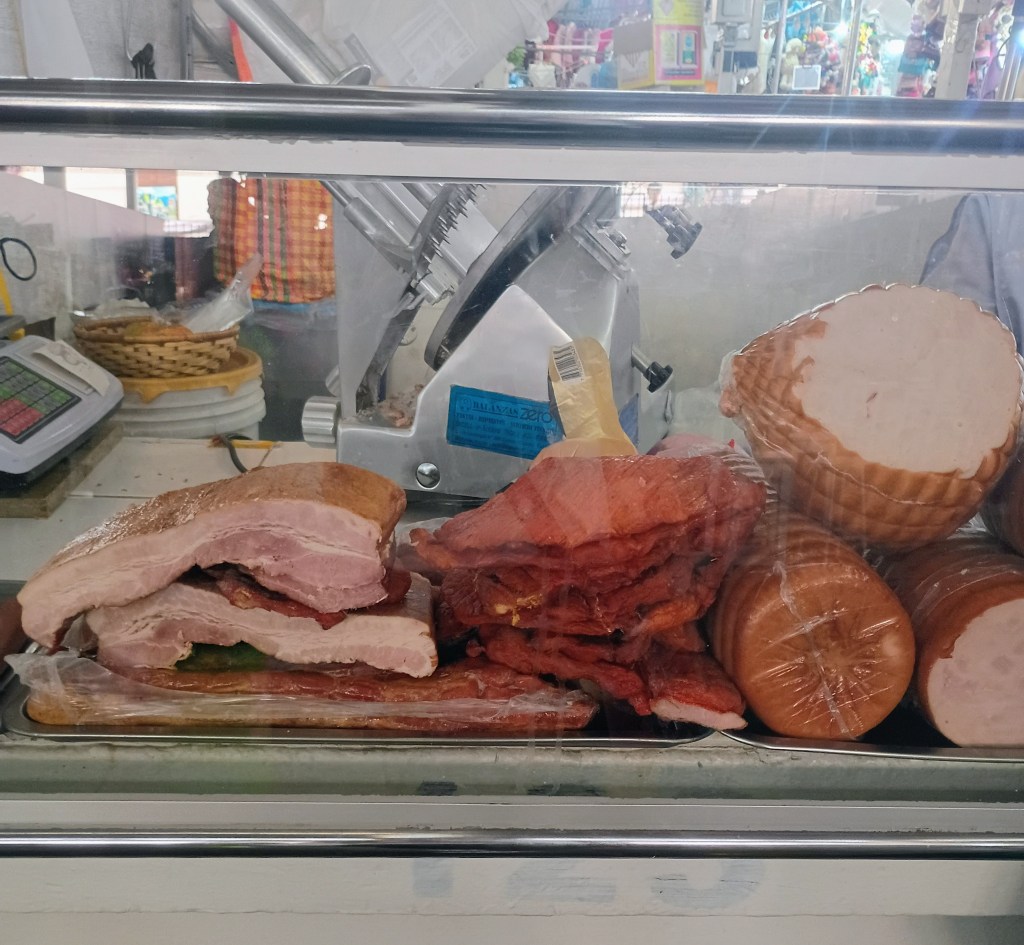
Peru has an incredible variety of potatoes and corn, and seeing so many of them piled together made the selection in our grocery stores back home look pretty boring.
Markets are also one of my favorite ways to see how people actually eat.
A restaurant menu shows you what someone thinks visitors want to order.
A market shows you what people really buy.
I took pictures of everything.
Obviously.
The Sacred Valley: llamas, alpacas and color
Our trip through the Sacred Valley gave us another look at the connection between agriculture and traditional Andean culture.
We stopped at a llama and alpaca farm and learned how to tell the different camelids apart and how their wool is used.
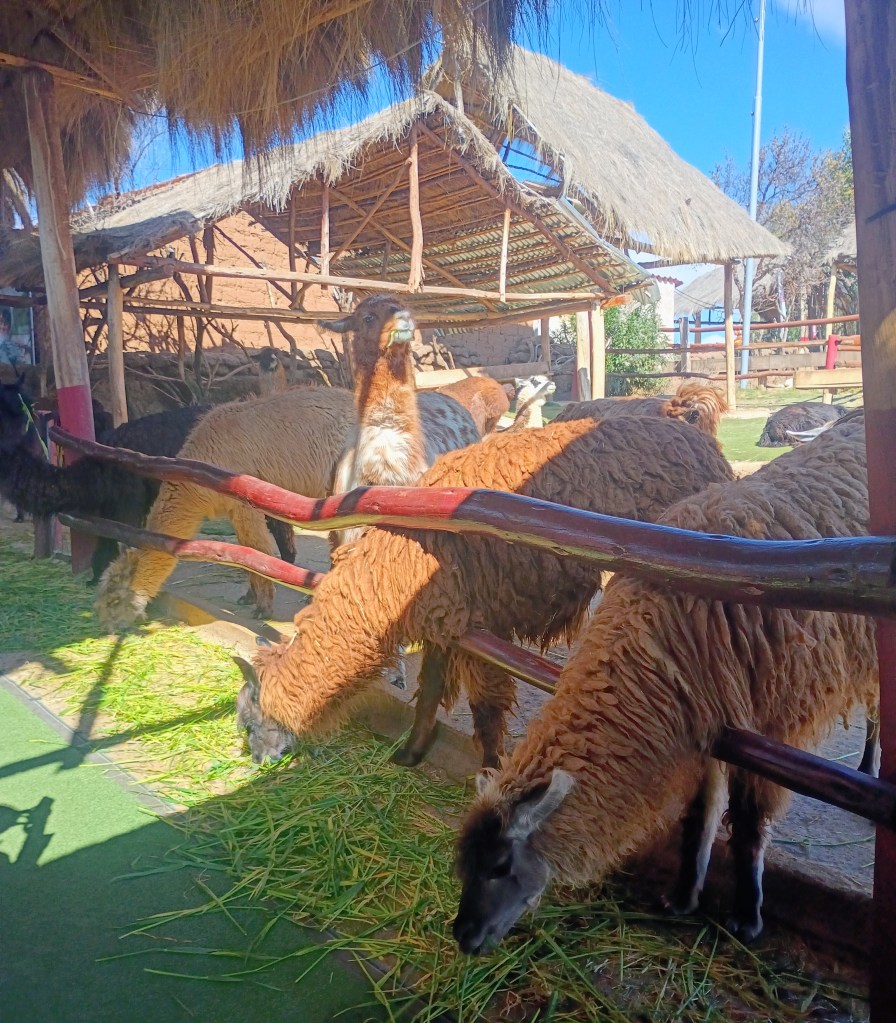
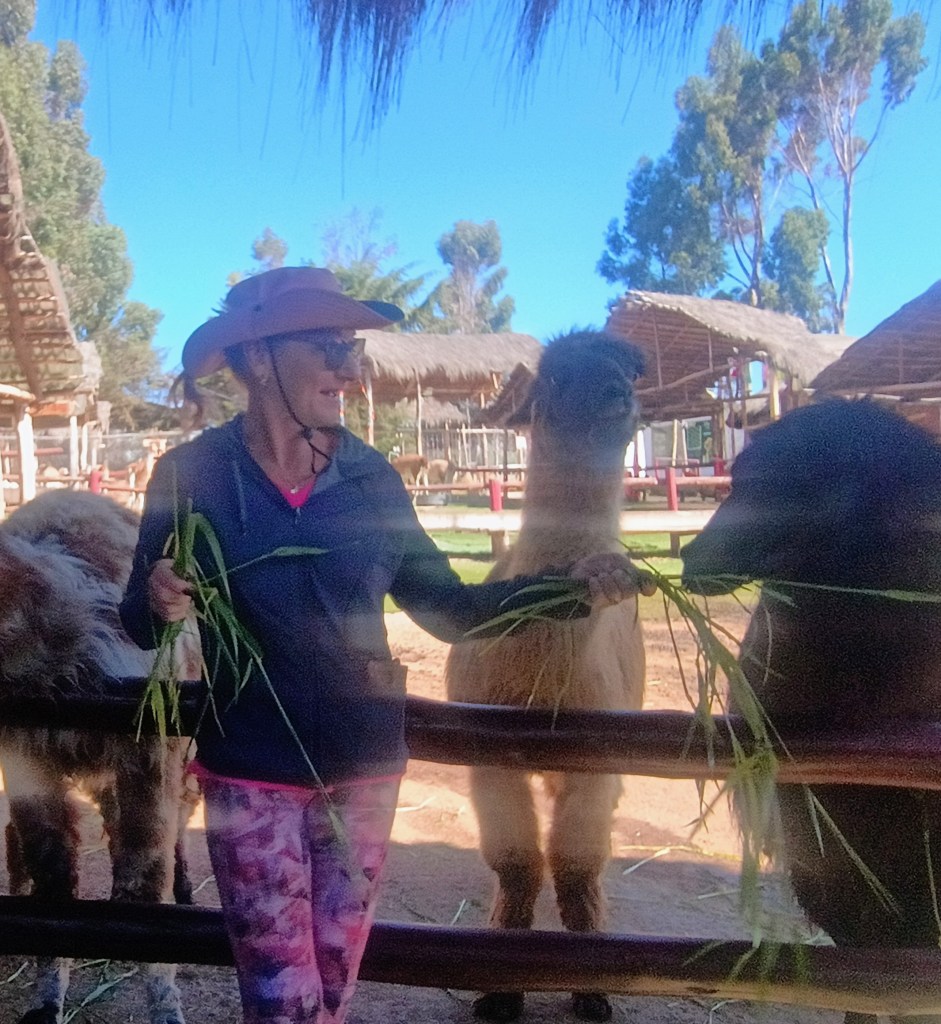
The part that fascinated me most was watching local women demonstrate the traditional process of spinning and dyeing yarn.
Plants, minerals and even insects are used to create the beautiful reds, yellows, greens and blues seen in Andean textiles.
The ingredients are boiled with the yarn to produce the colors.
As someone who is always fermenting, canning, baking, smoking or otherwise experimenting with food and plants, I loved this.
Different purpose, same general philosophy:
Use what grows around you and figure out what you can create with it.
Then we headed to Ollantaytambo and climbed our first serious set of Inca stairs.
At the time, I thought those stairs were challenging.
That was adorable.
I had no idea what was coming.
Chicha on the trail
One of the more interesting food stops happened on the first day of the Inca Trail when we stopped to see how chicha, a traditional fermented corn beverage, is made.
This wasn’t something confined to restaurants or tourist demonstrations.
We saw chicha for sale from private homes along the trail and later in other communities.
It felt very much like part of everyday life.
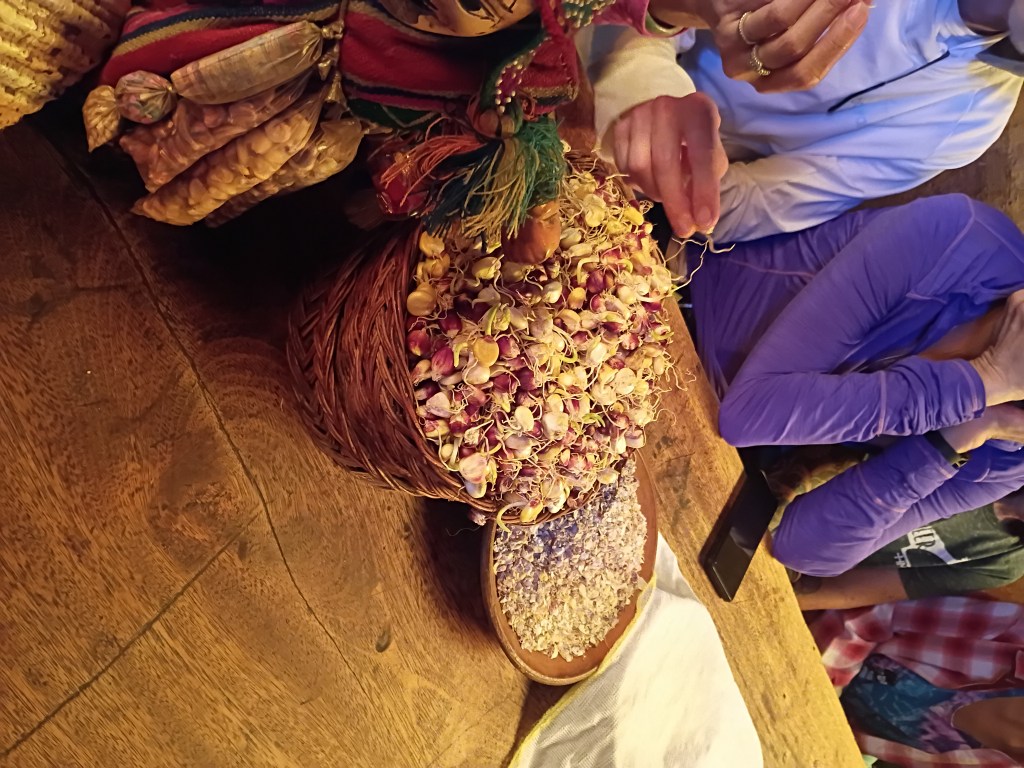
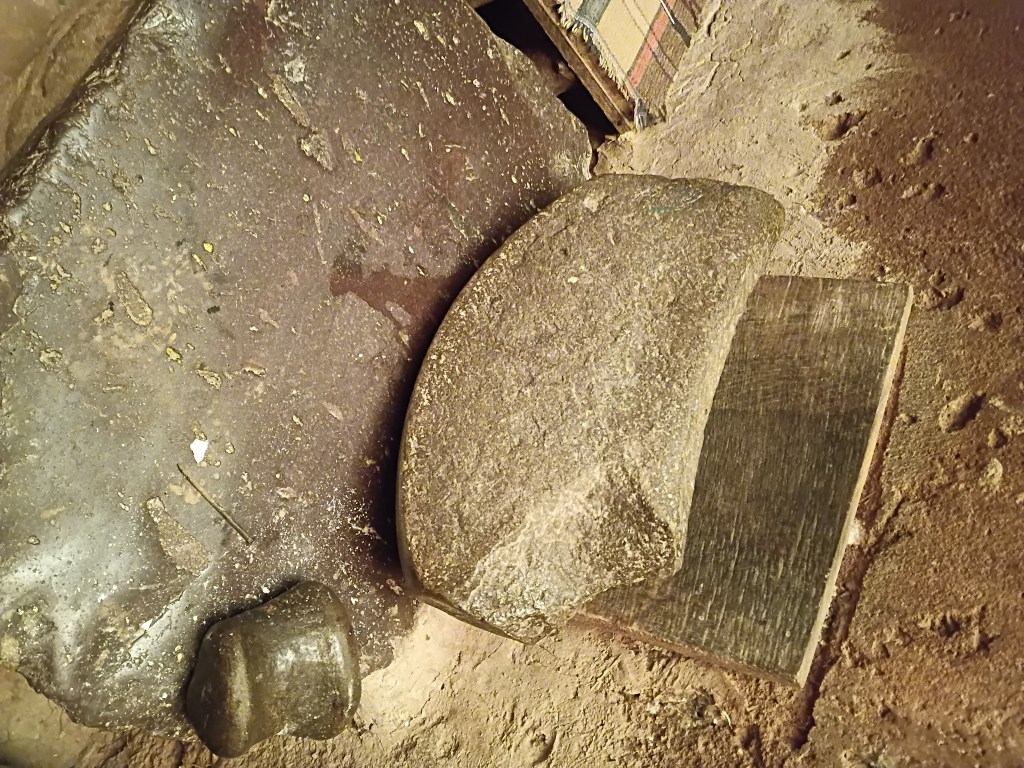
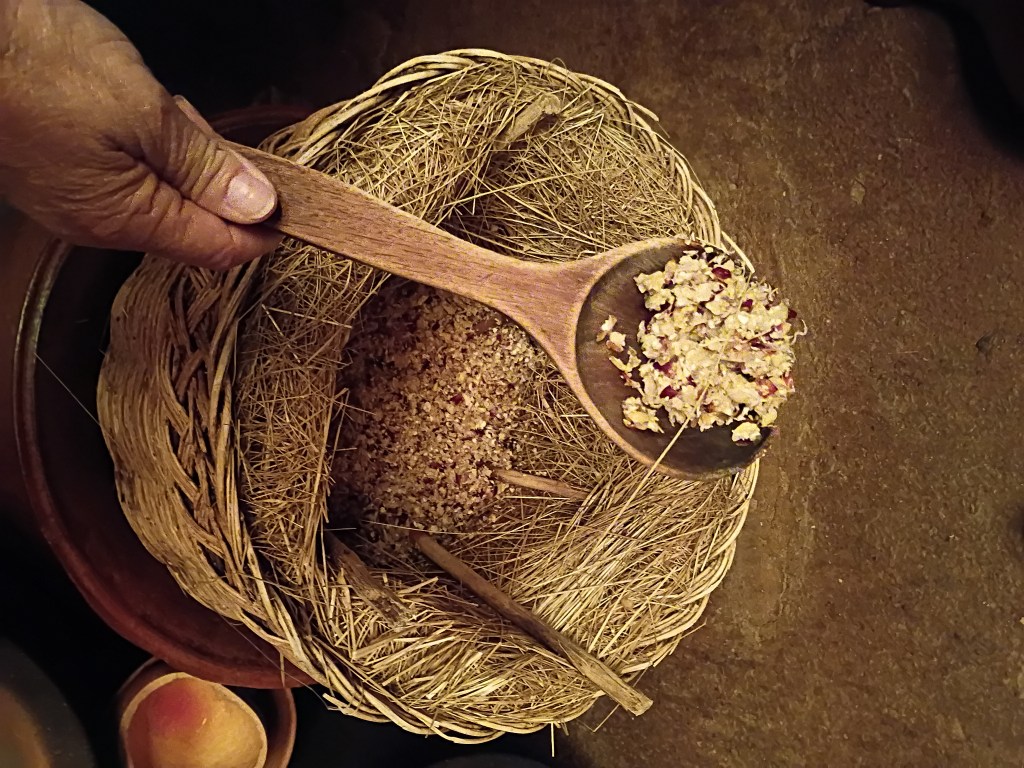
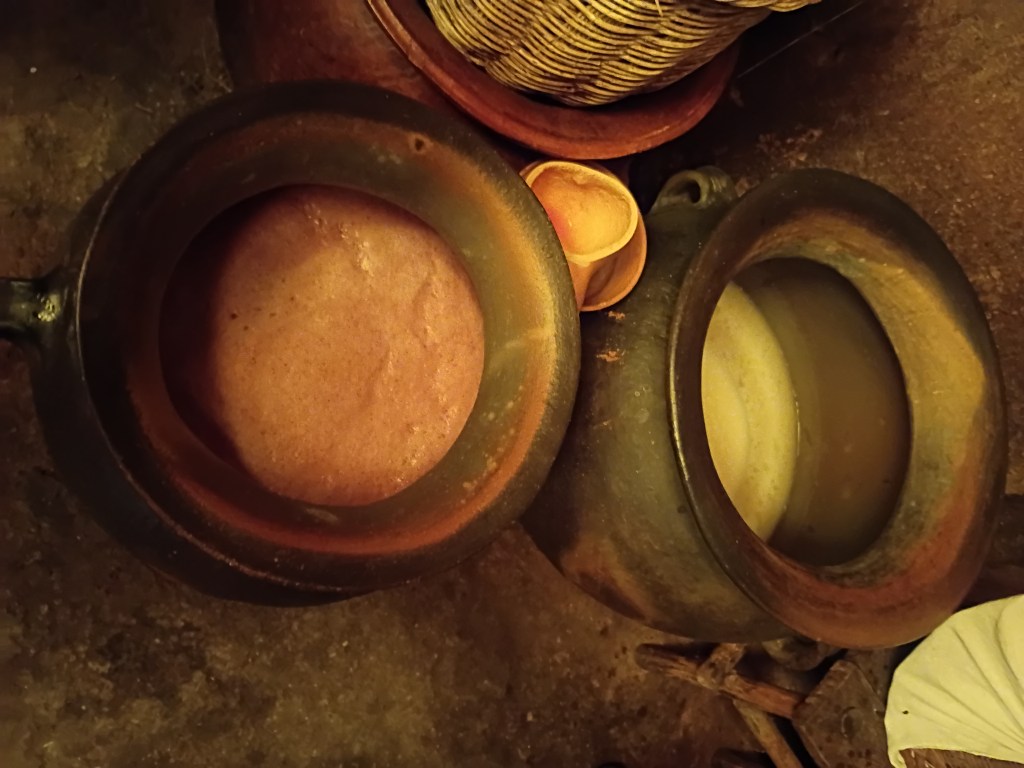
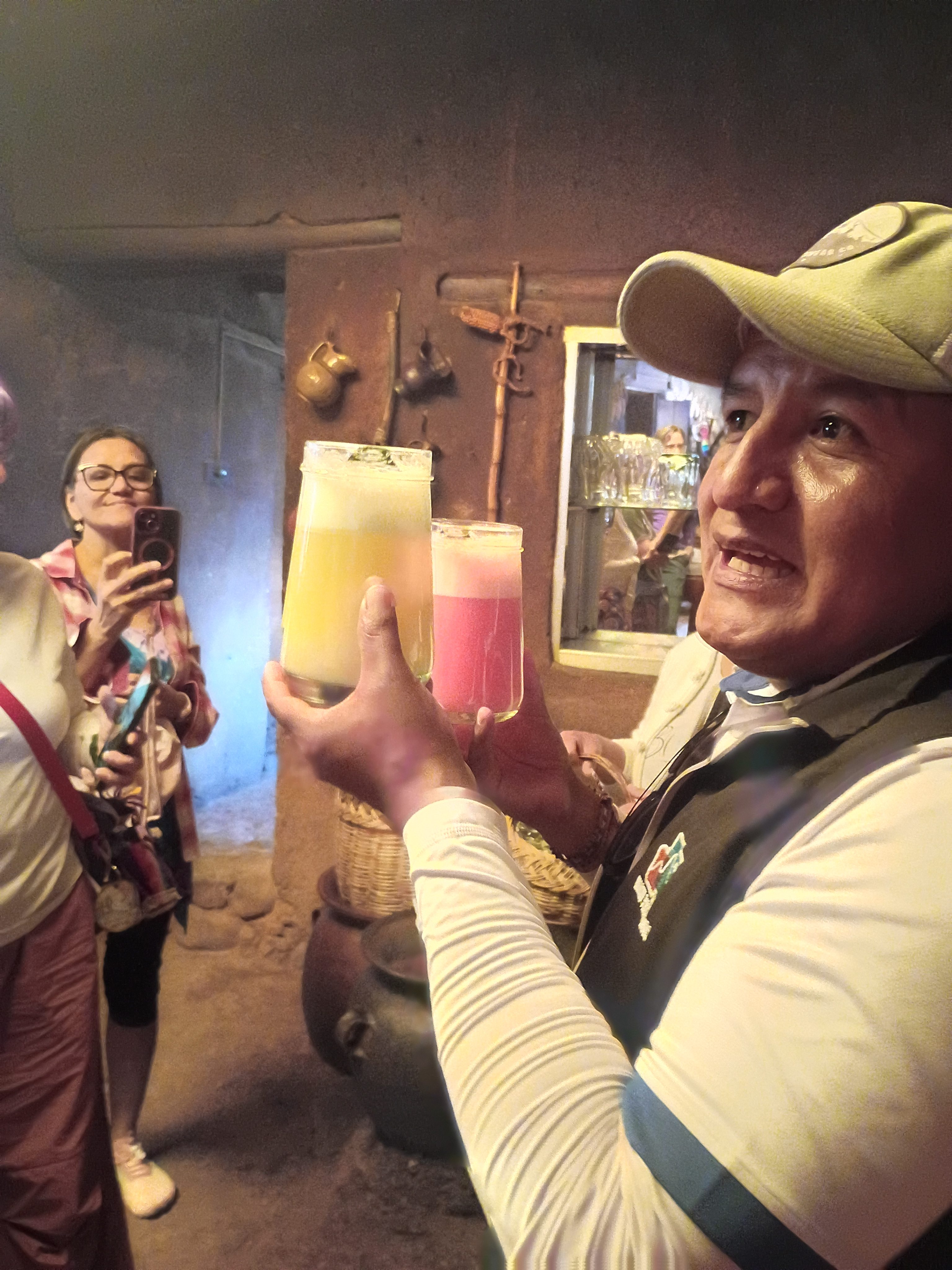
Naturally, I was fascinated.
I ferment vegetables at home, maintain sourdough starter and generally consider bubbling food a sign that something interesting is happening.
So yes, I wanted to try it.
Did I?
No.
Our guide recommended that we skip it because the local fermentation bacteria could be very different from what our stomachs were accustomed to.
Considering we were just beginning several days of hiking through the Andes with limited bathroom options, this seemed like a particularly poor time for an uncontrolled fermentation experiment.
For once, curiosity lost.
Barely.
I still wish I could tell you what it tasted like.
And then we started hiking
Once we started the four-day Inca Trail, the food experience changed completely.
No restaurants.
No Pisco Sours.
No menu.
No deciding what sounded good.
And strangely enough, we still ate really well.
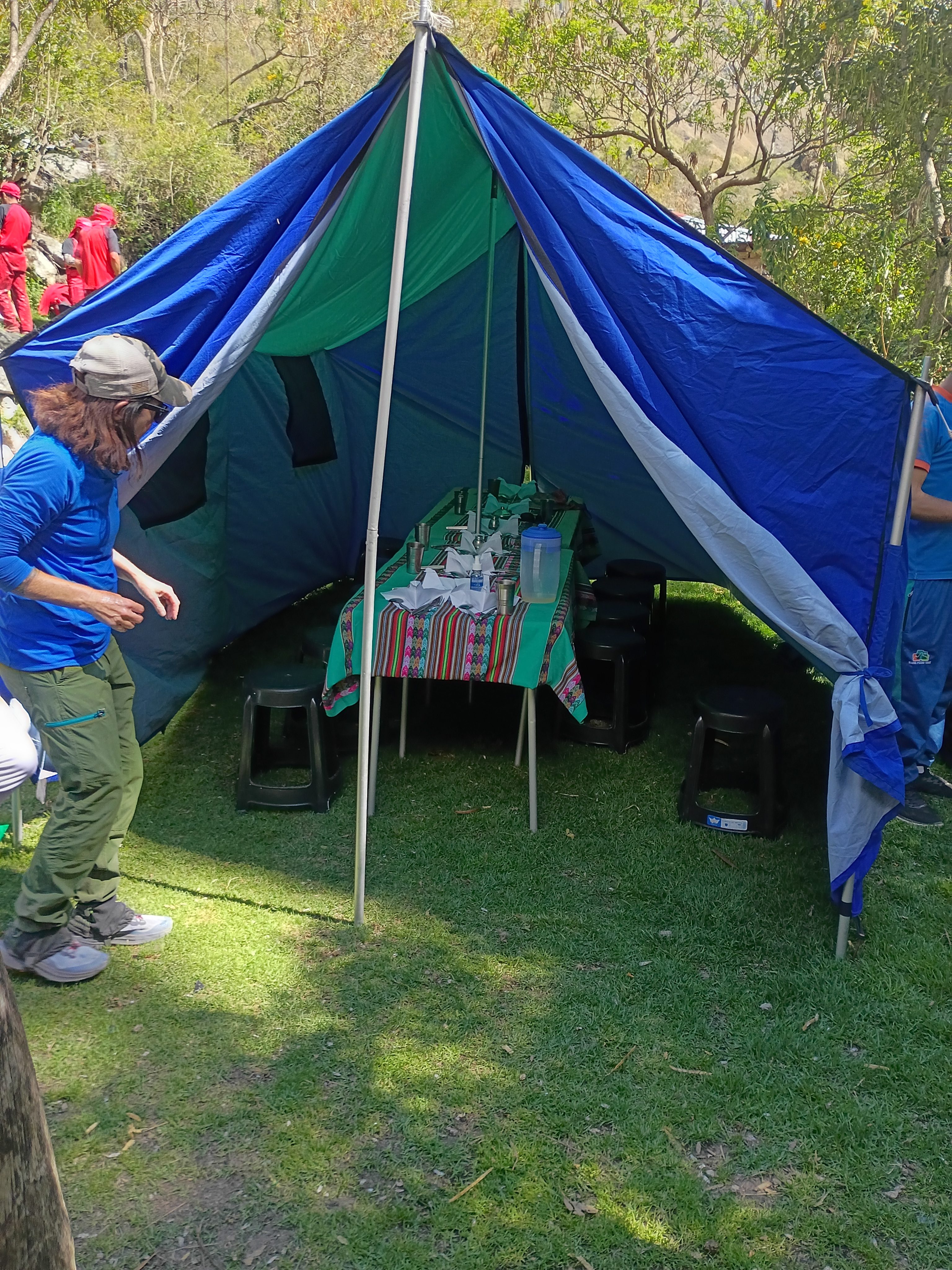
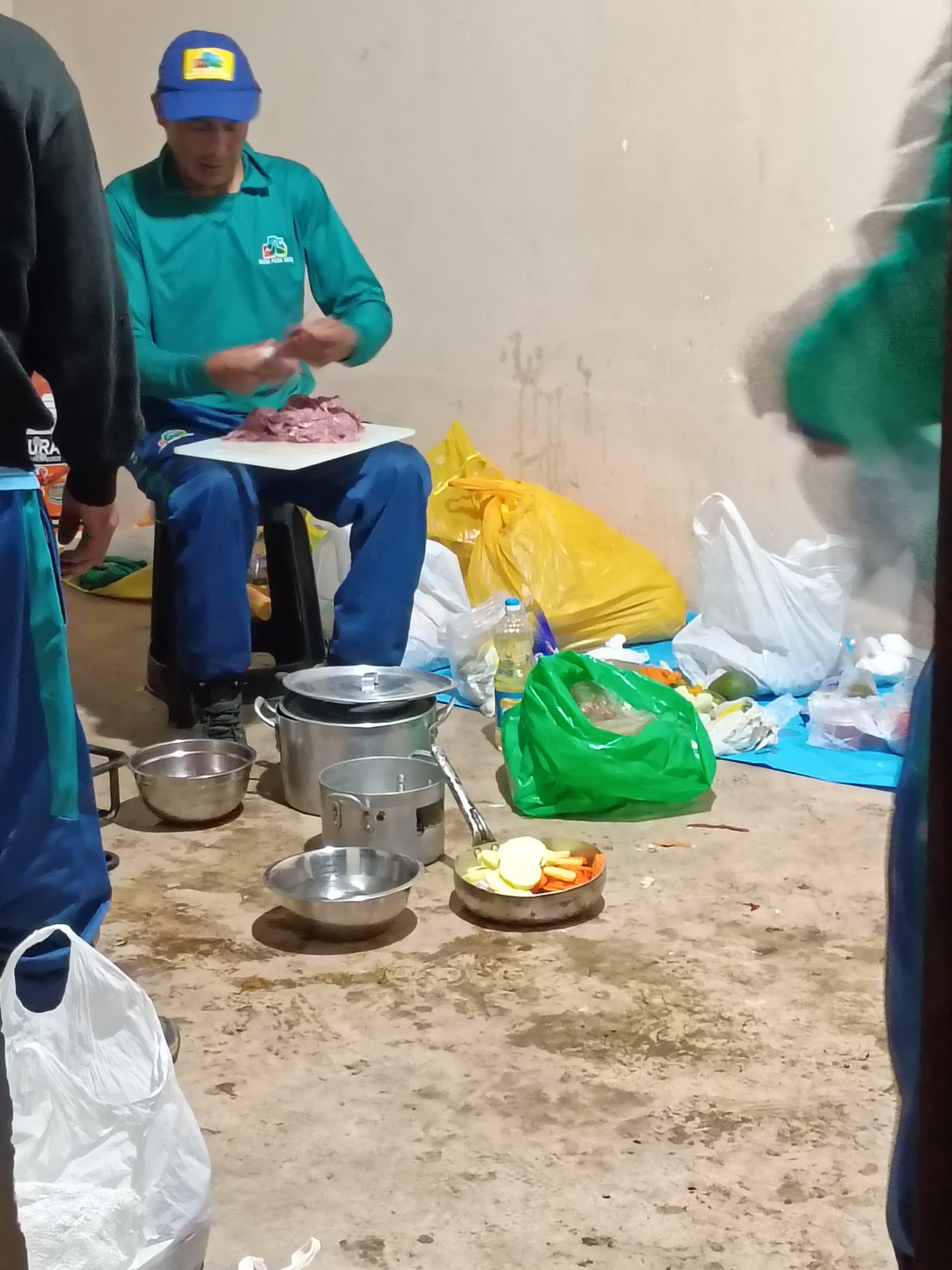
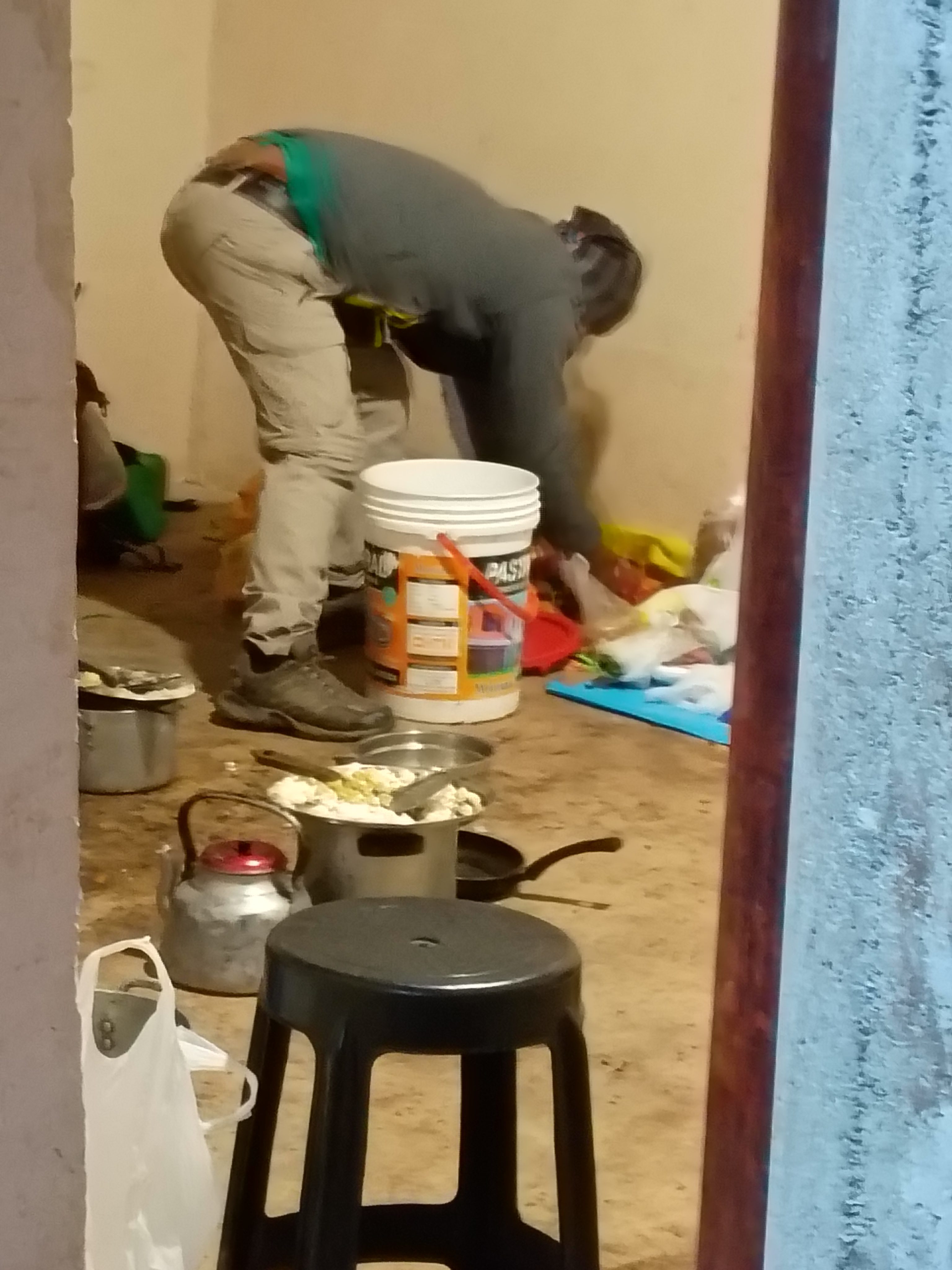
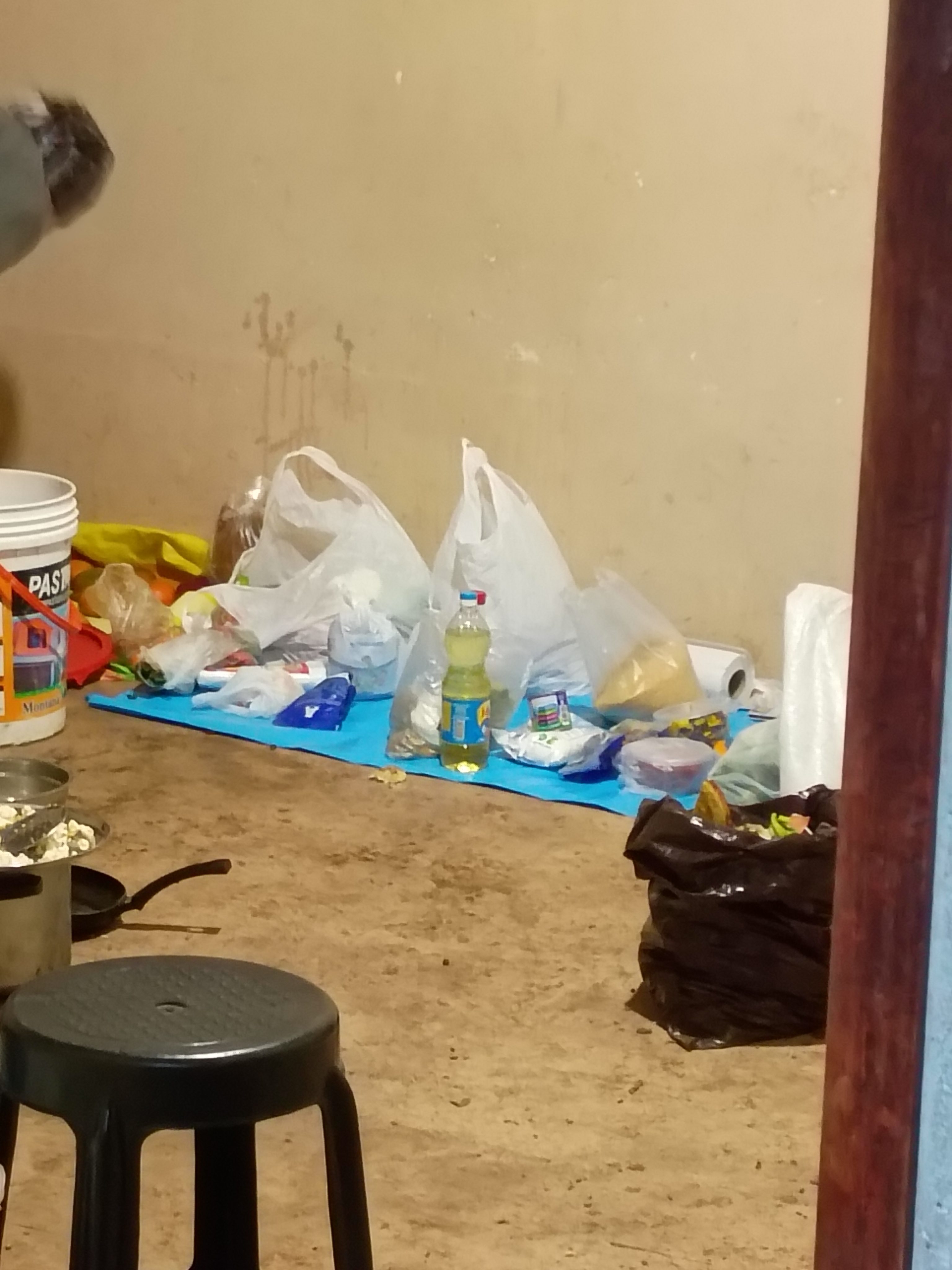
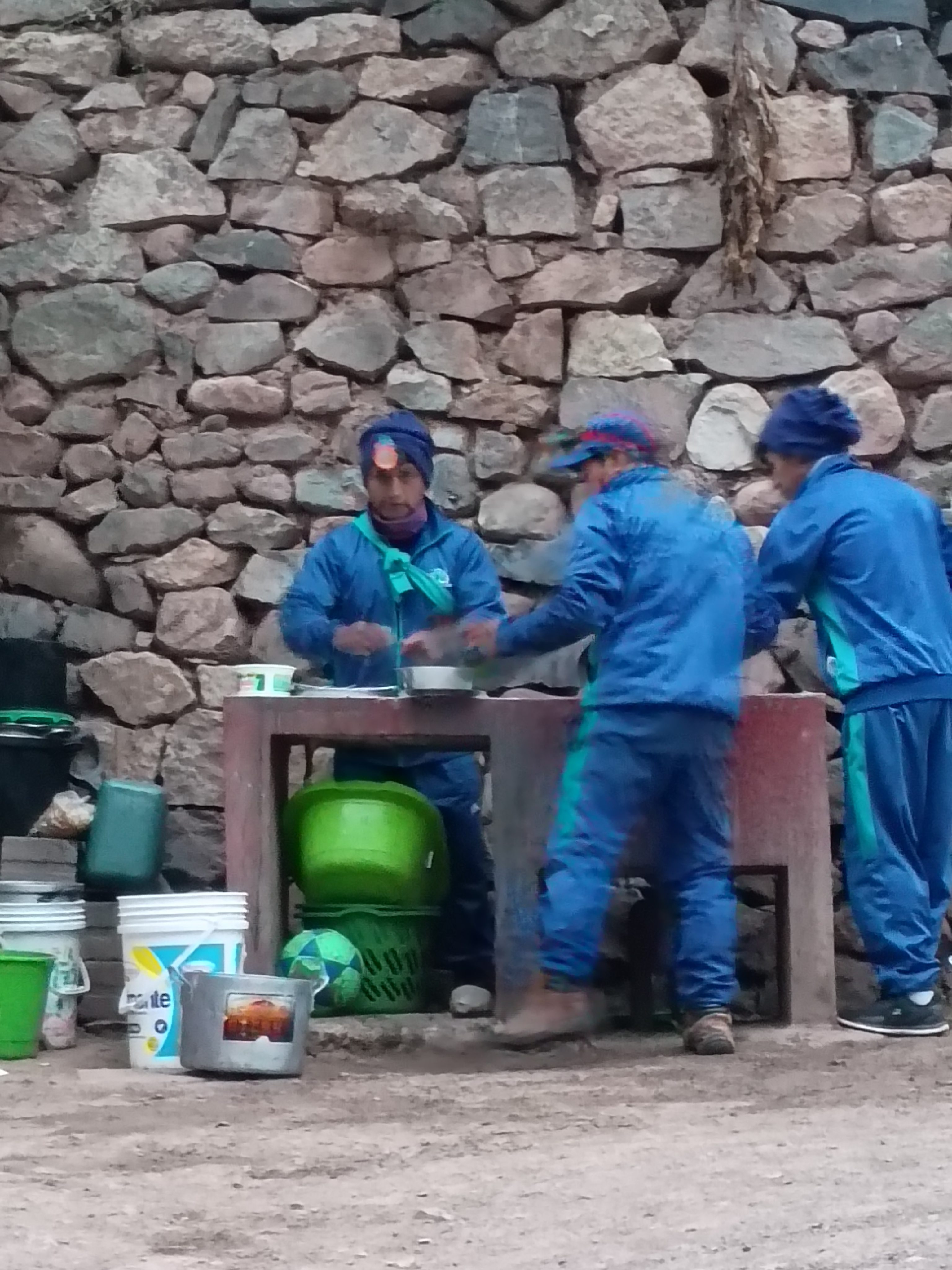
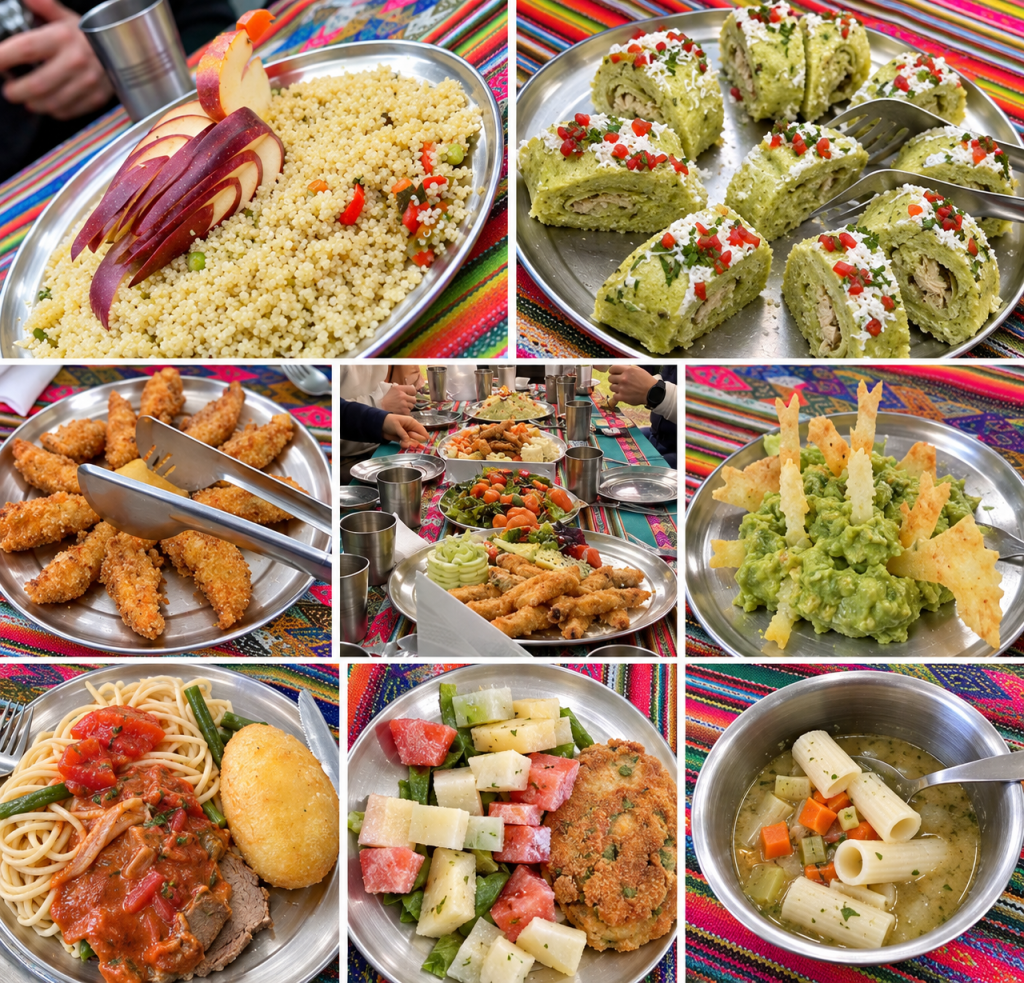
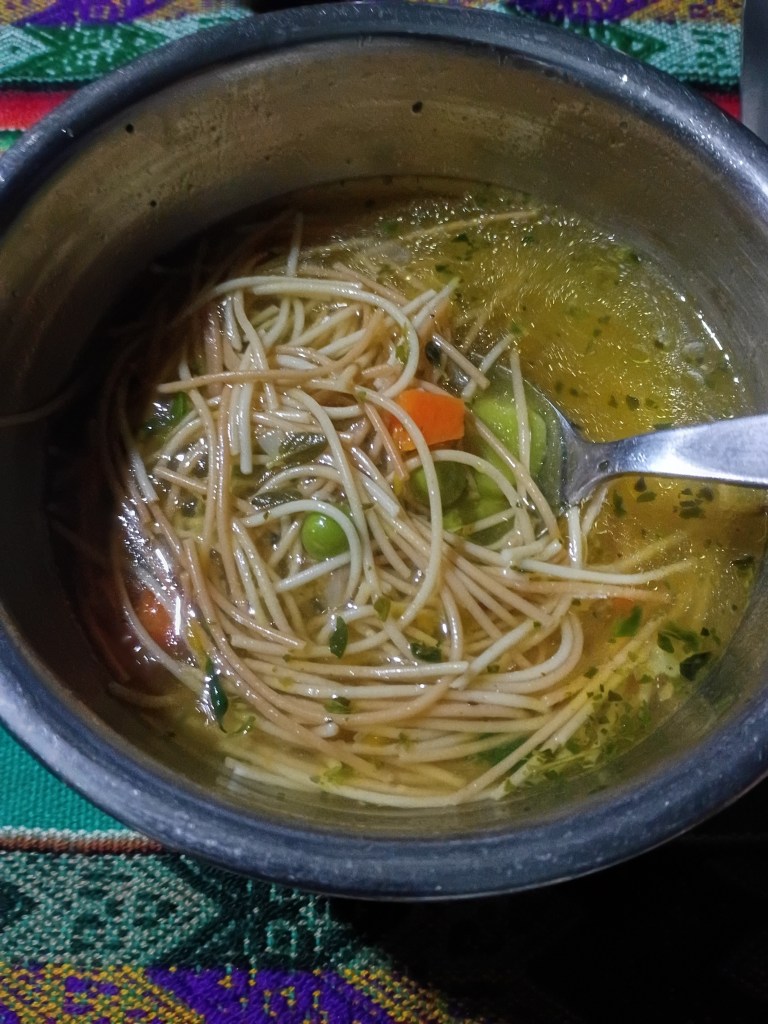
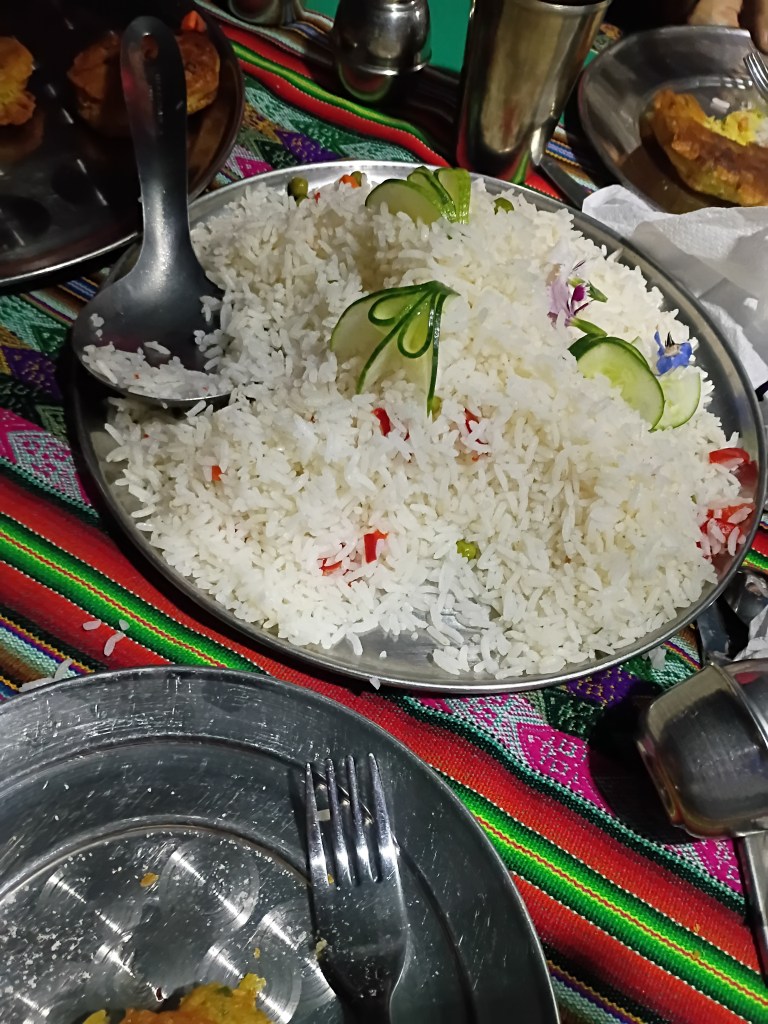
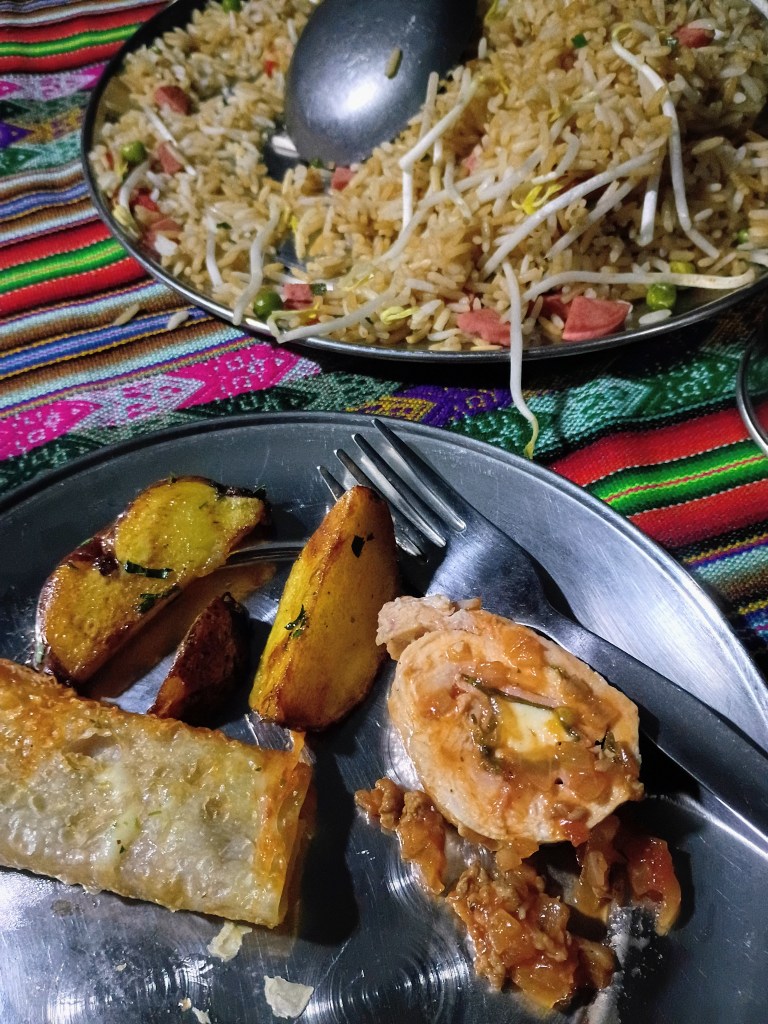
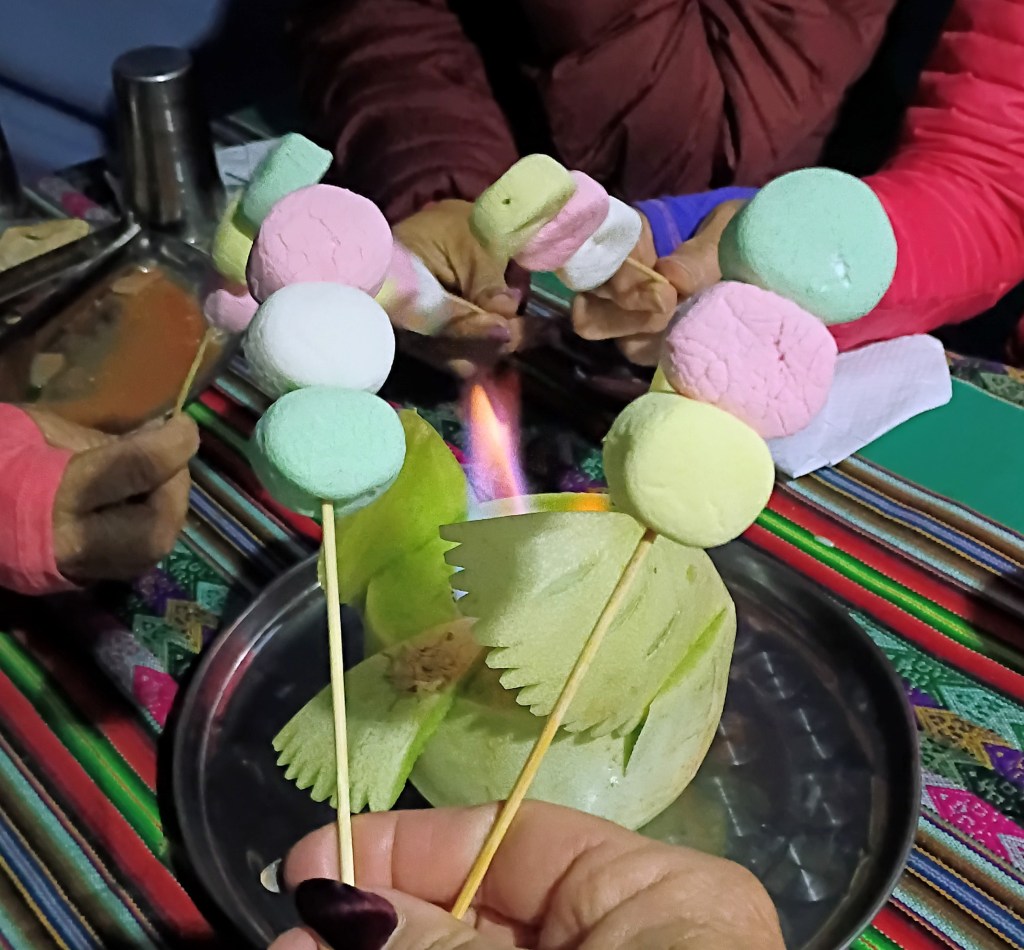
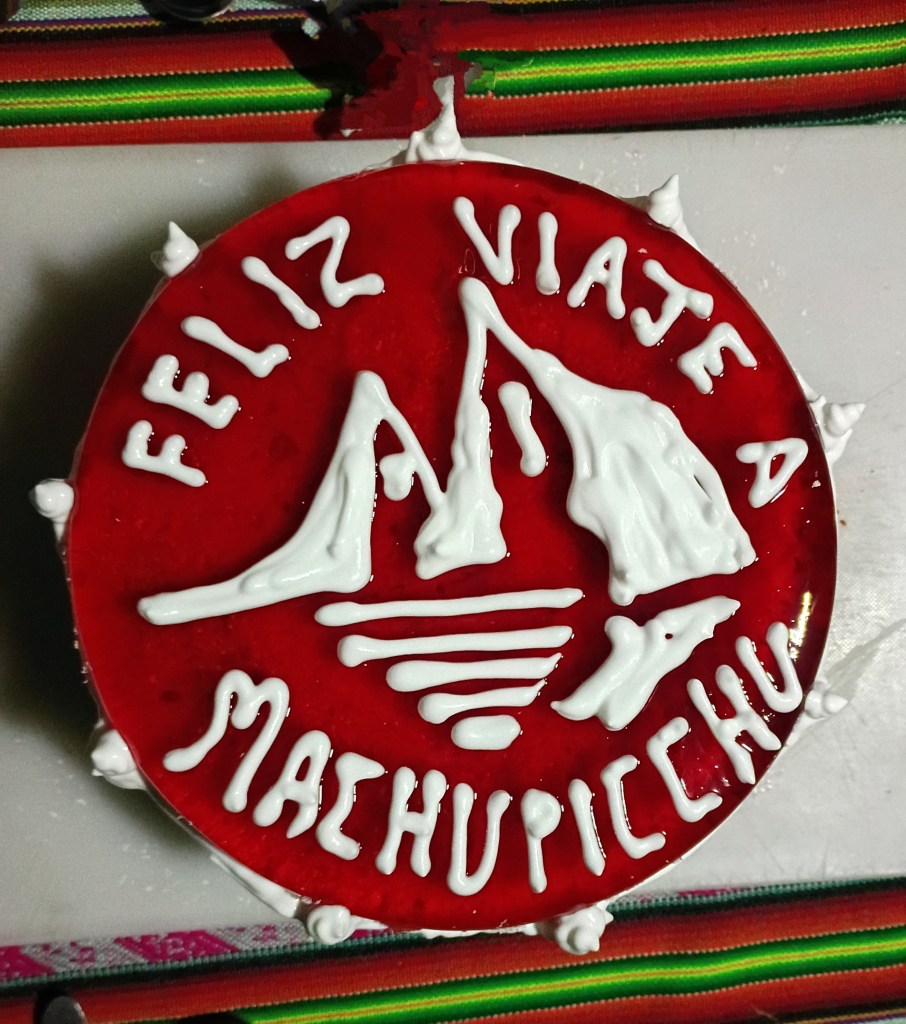
The cooks traveling with us prepared actual multi-course meals at camp, which seemed almost miraculous when you saw what they had to work with.
Sometimes they had a small shed.
Sometimes they had a tent.
They had pots and pans, running water and a propane burner.
That’s basically it.
Yet somehow they brought out soup, salads, main dishes, sides and desserts with Michelin-star restaurant timing.
And their presentation was spot on.
This is where I learned another important lesson:
Food tastes REALLY good after you have spent hours climbing stone stairs at high altitude.
Soup?
Amazing.
Pasta?
Best pasta ever.
Something warm placed in front of me after another day of climbing?
Five stars.
No notes.
By Day 2 we climbed Dead Woman’s Pass, the highest point of the Inca Trail at nearly 14,000 feet.
My legs actually handled the climbing fairly well.
My lungs had some objections.
At that elevation I developed a sudden and passionate interest in photographing moss, flowers and basically anything located next to a convenient place to stop and breathe.
“Oh look! Moss!”
Stop.
Photo.
Breathe.
Repeat.
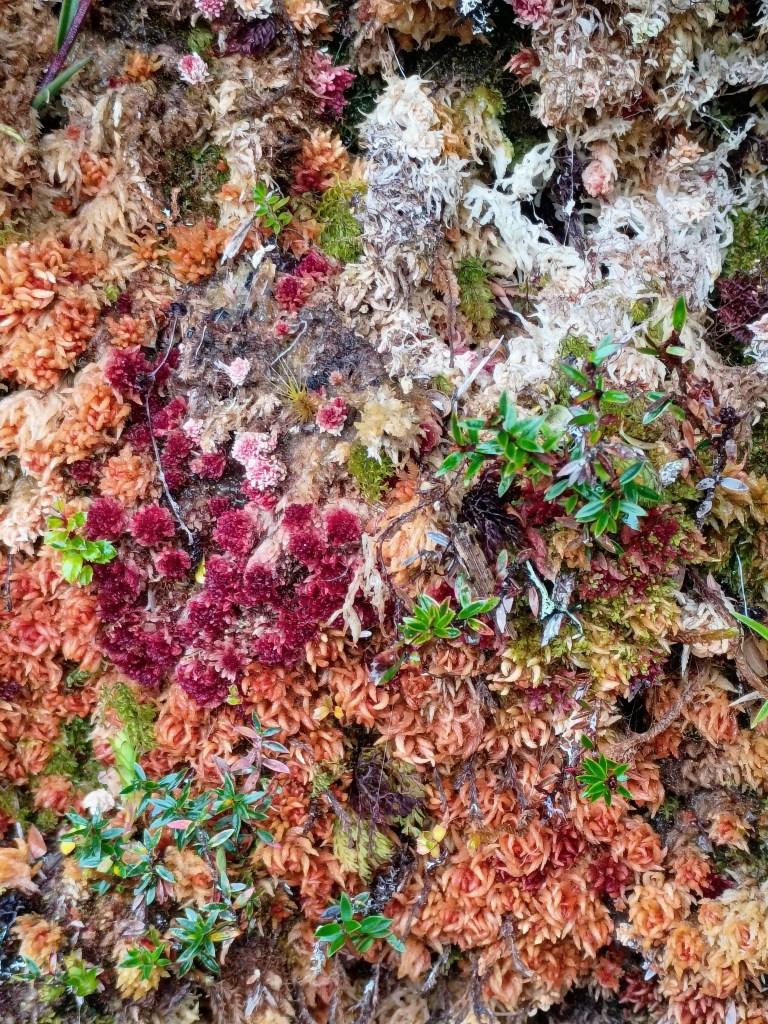
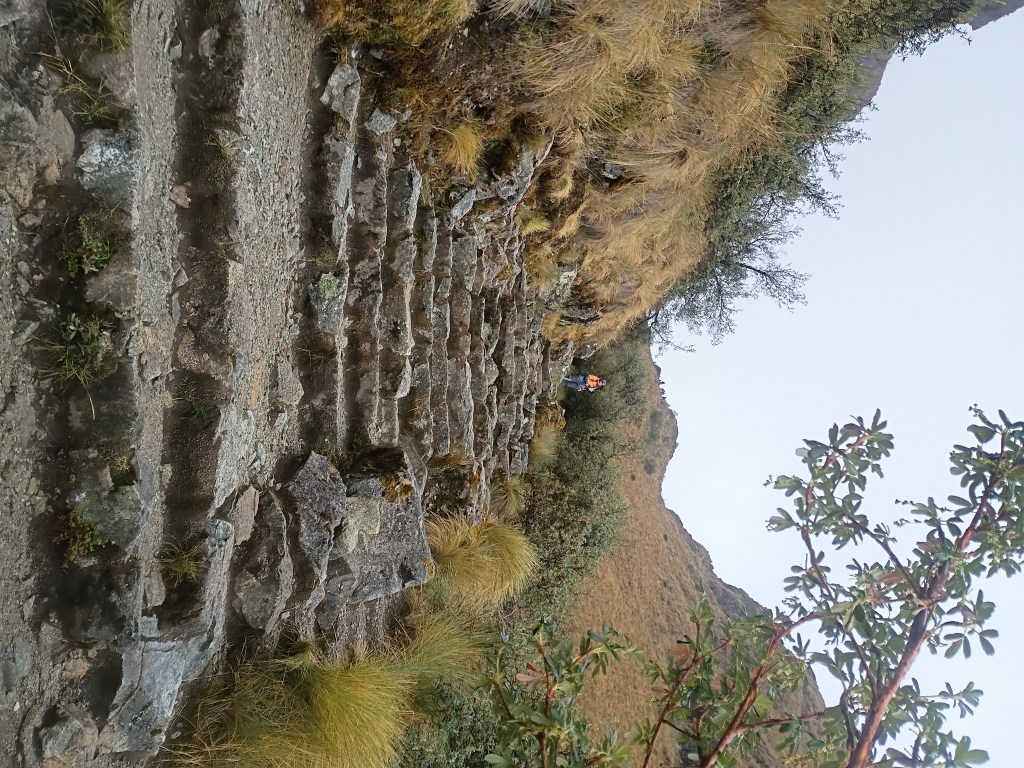
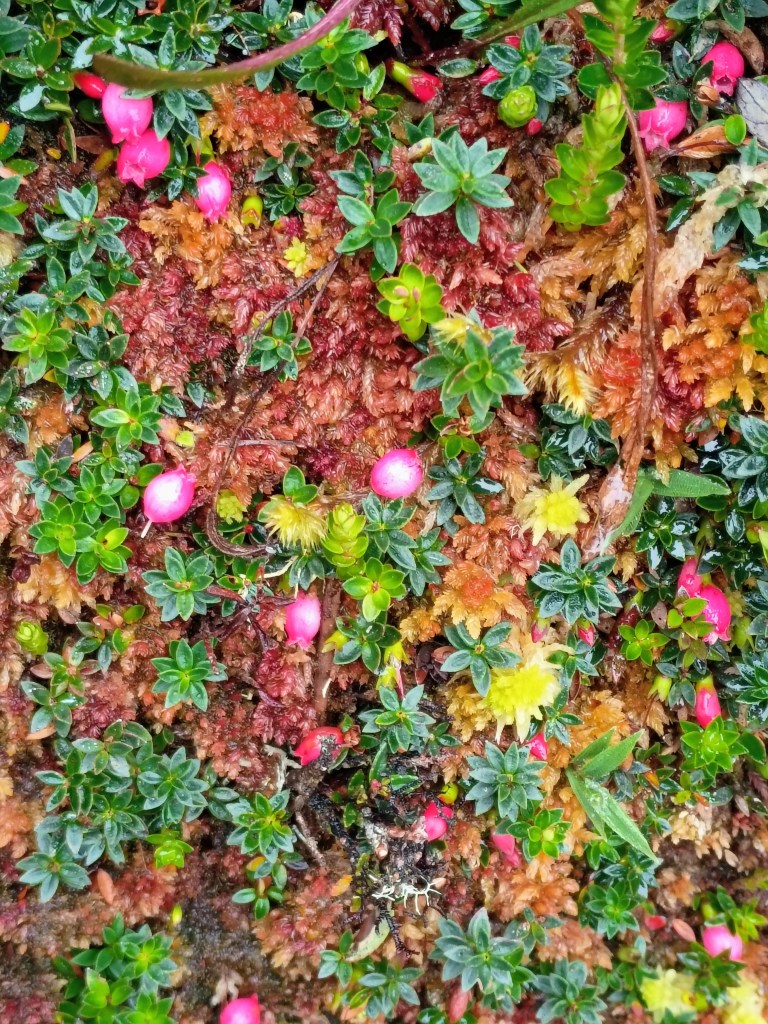
I really did think the moss and tiny flowers were beautiful.
The fact that photographing them also gave me a reason to stop was simply a bonus. 🙂
By the time we reached camp every day, sitting down to a hot meal felt like a luxury.
Food became less about trying something unusual and more about recovery.
And I think that made me appreciate it even more.
Machu Picchu…and civilization!
After four days on the trail, we finally reached Machu Picchu.
Clouds moved in and out that morning, sometimes hiding the mountains completely and then revealing pieces of the ruins again.
It was incredible.
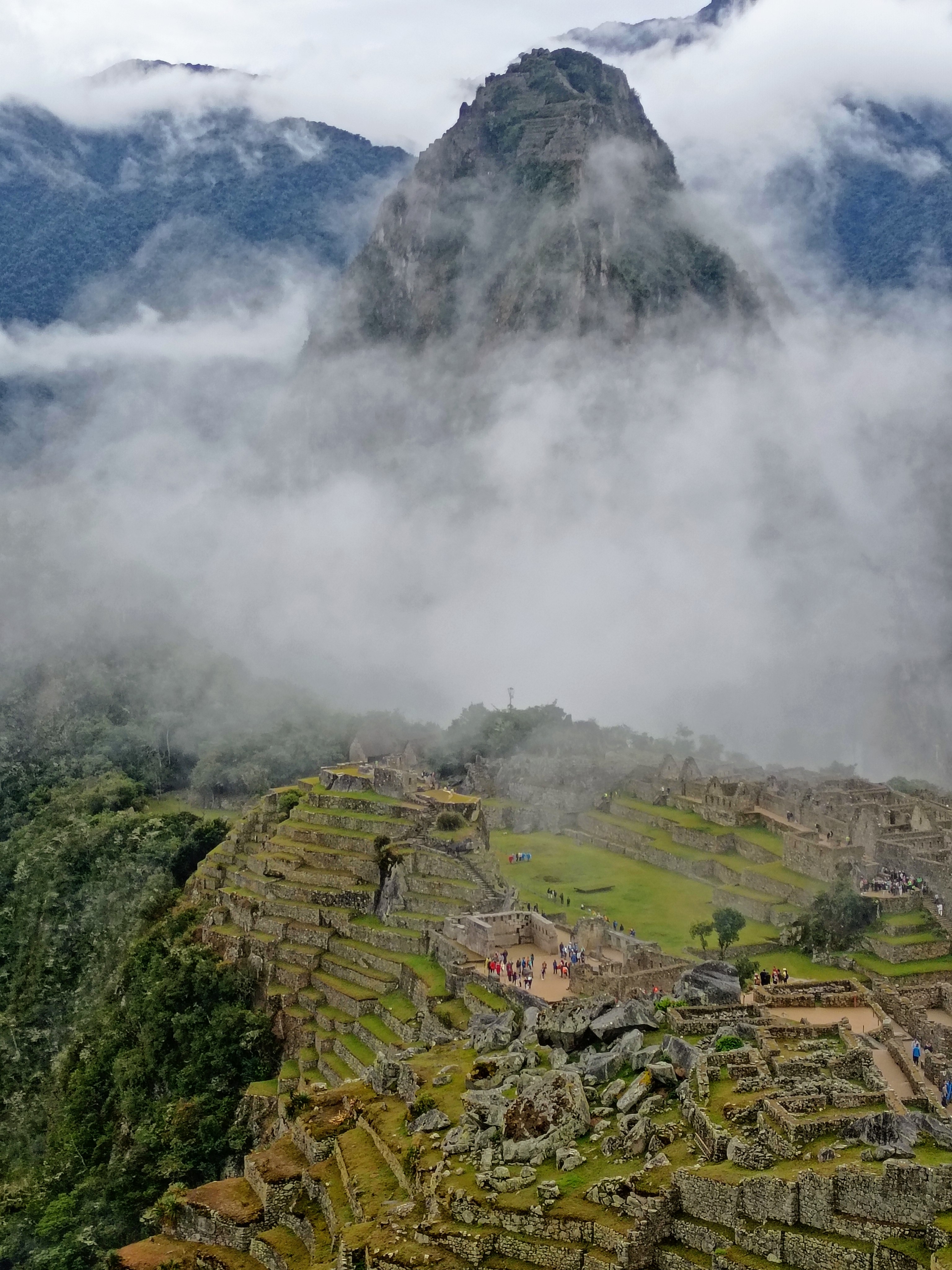
Eventually we made our way down to Aguas Calientes, where we encountered several other incredible things:
Restaurants.
Chairs.
Cocktails.
Actual bathrooms.
It’s amazing how quickly your definition of luxury changes after several days of hiking.
And yes, research resumed.
There was another Pisco Sour.
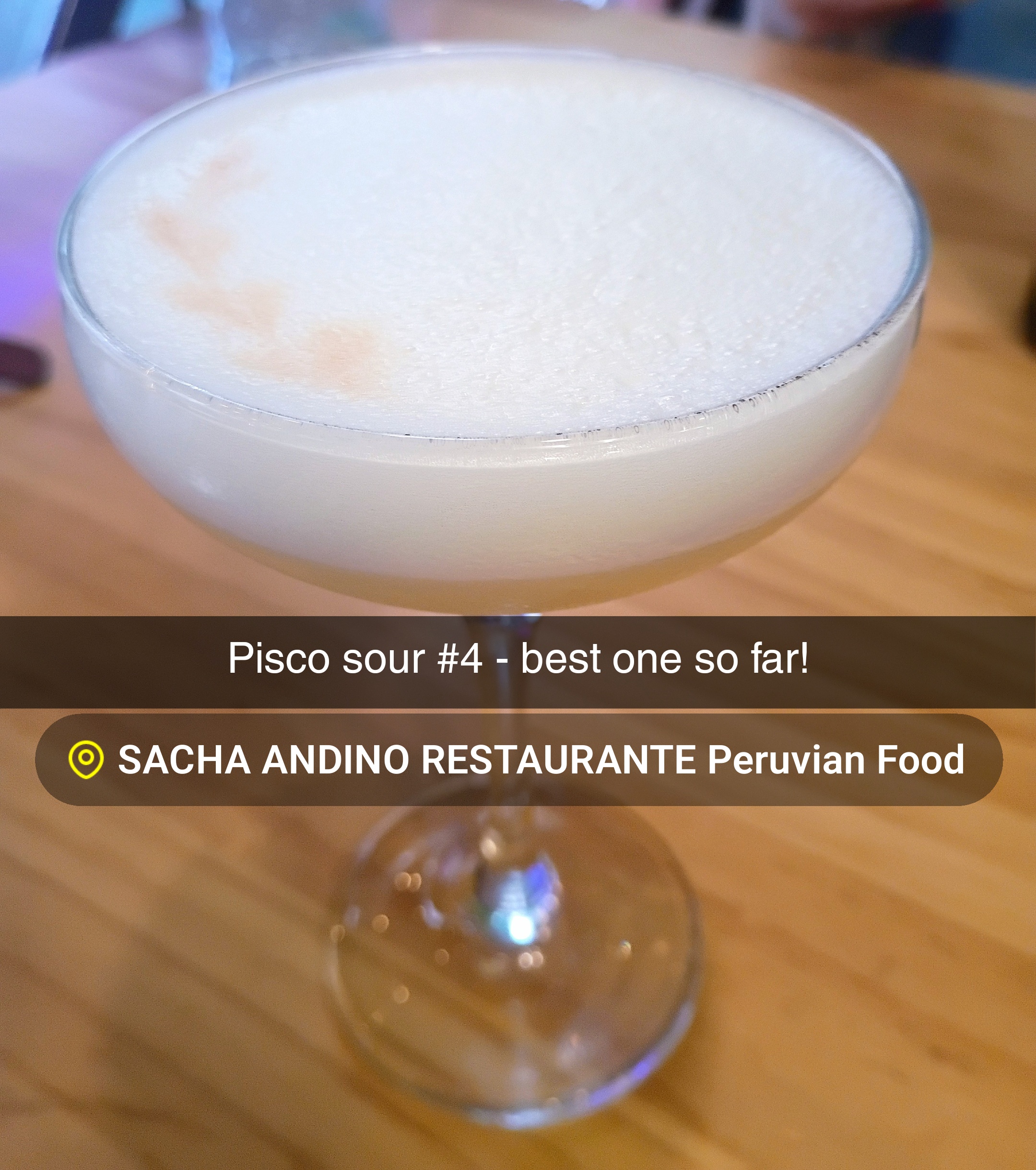
I’m not sure this was objectively the best Pisco Sour of the trip.
But context matters.
After four days on the trail, it tasted awfully good.
We had a full day off in Aguas Calientes before returning to Machu Picchu two days after our first arrival to climb Huayna Picchu.
That rest day involved wandering, shopping and, naturally, eating.
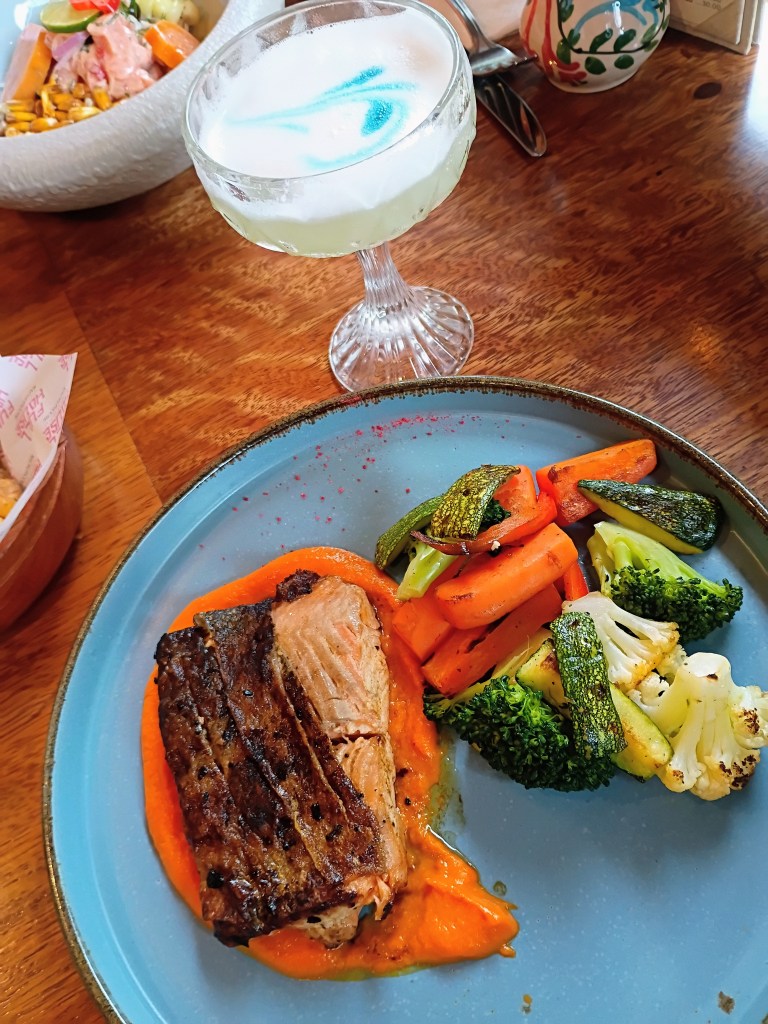
The food presentation throughout Peru impressed me.
Even fairly casual restaurants often served beautifully plated dishes that looked like someone had really taken care with them.
And after trail meals, I was more than happy to appreciate the presentation.
And the cocktails.
Especially the cocktails.
Huayna Picchu: because apparently we needed more stairs
When we returned to Machu Picchu, the weather could not have been more different.
Warm.
Sunny.
Clear.
We finally got the huge postcard views the clouds had hidden during our first visit.
Then we climbed Huayna Picchu.
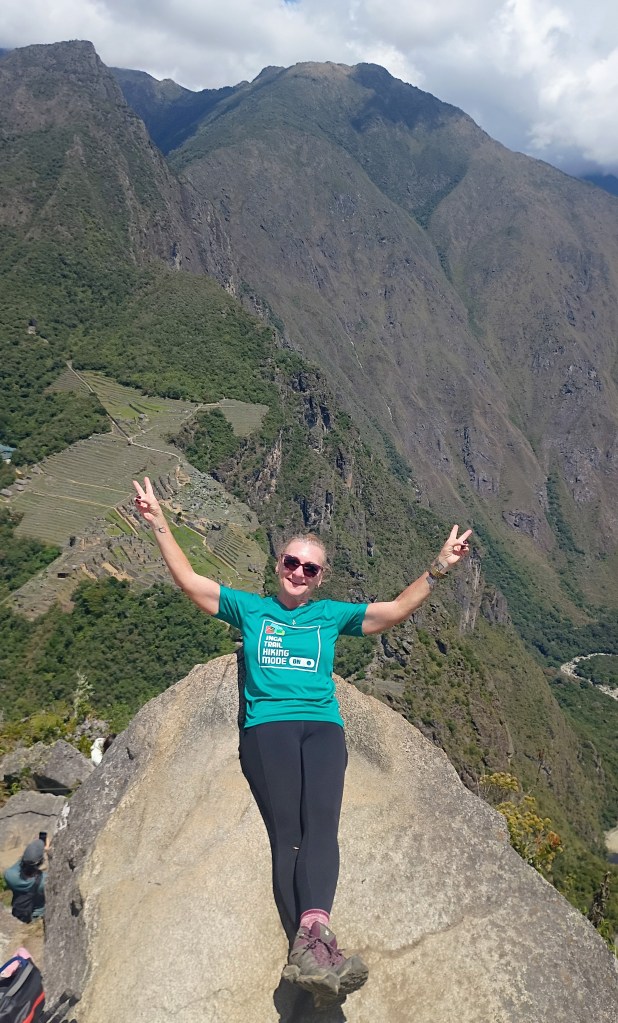
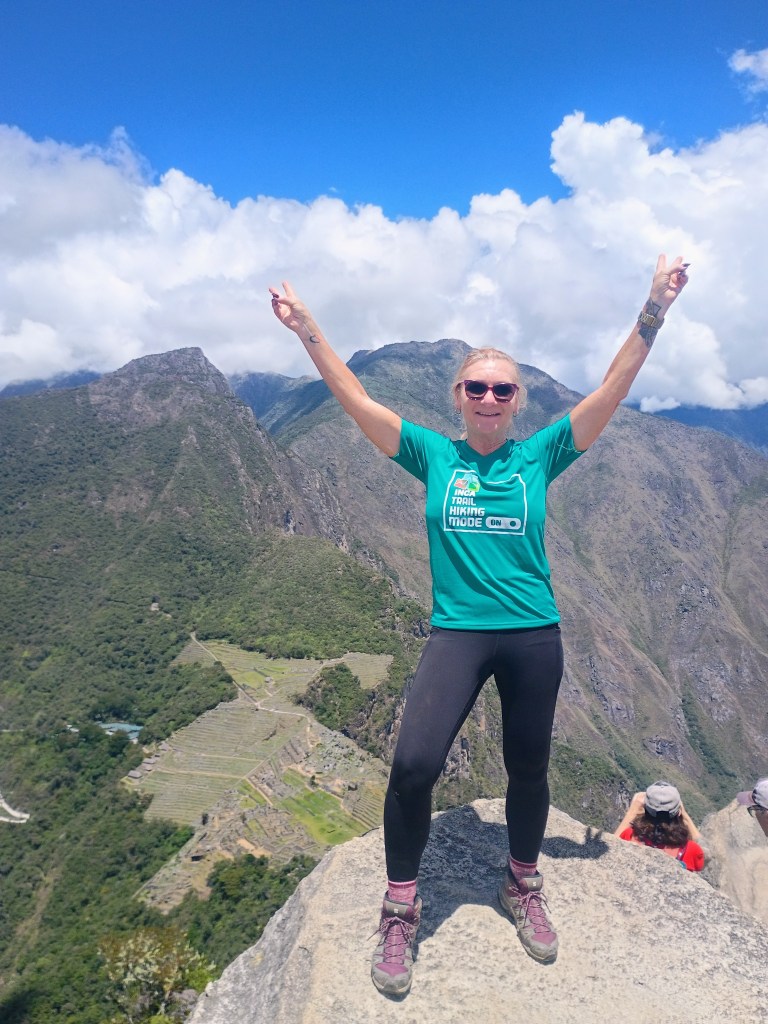
The views were absolutely worth it.
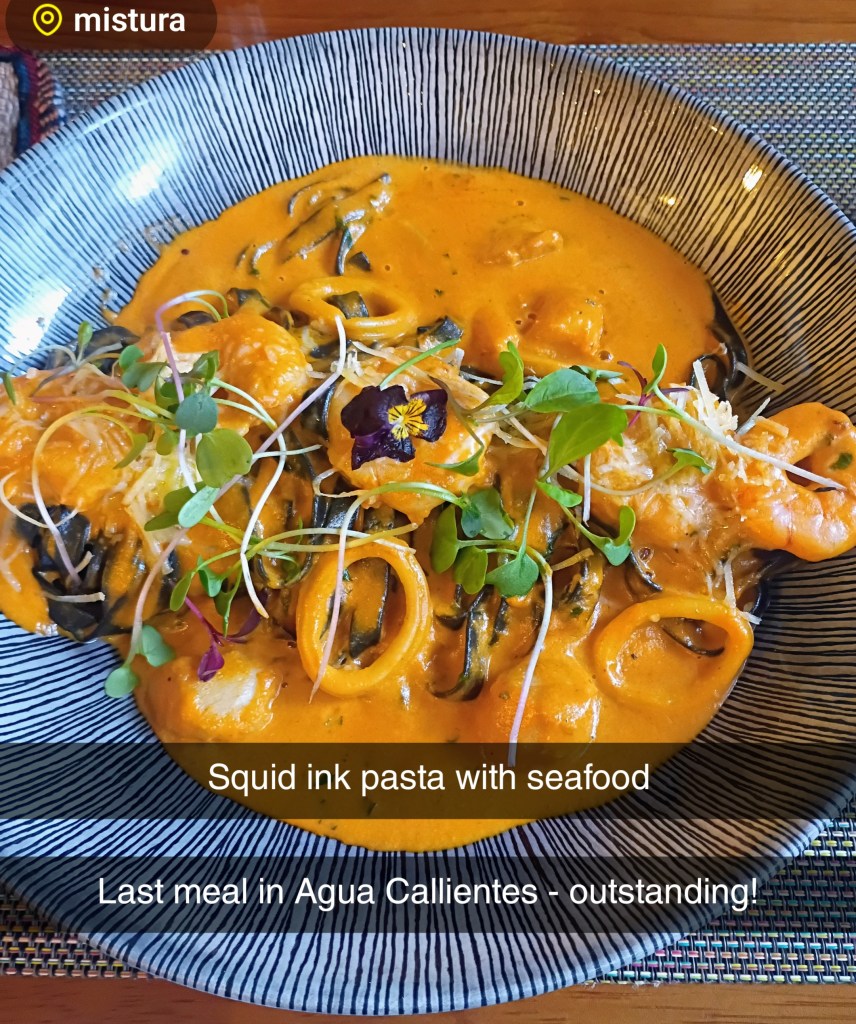
So was dinner afterward.
There is definitely a recurring theme here.
Climb something.
Eat.
Climb something else.
Have a cocktail.
I really could build a fitness program around this.
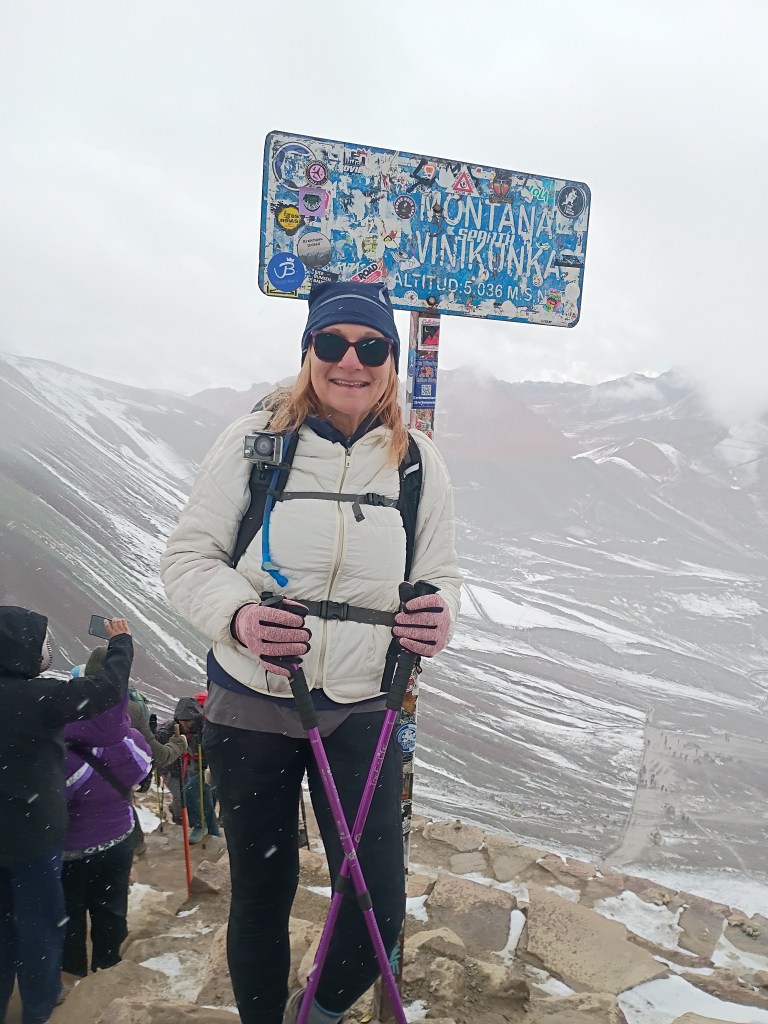
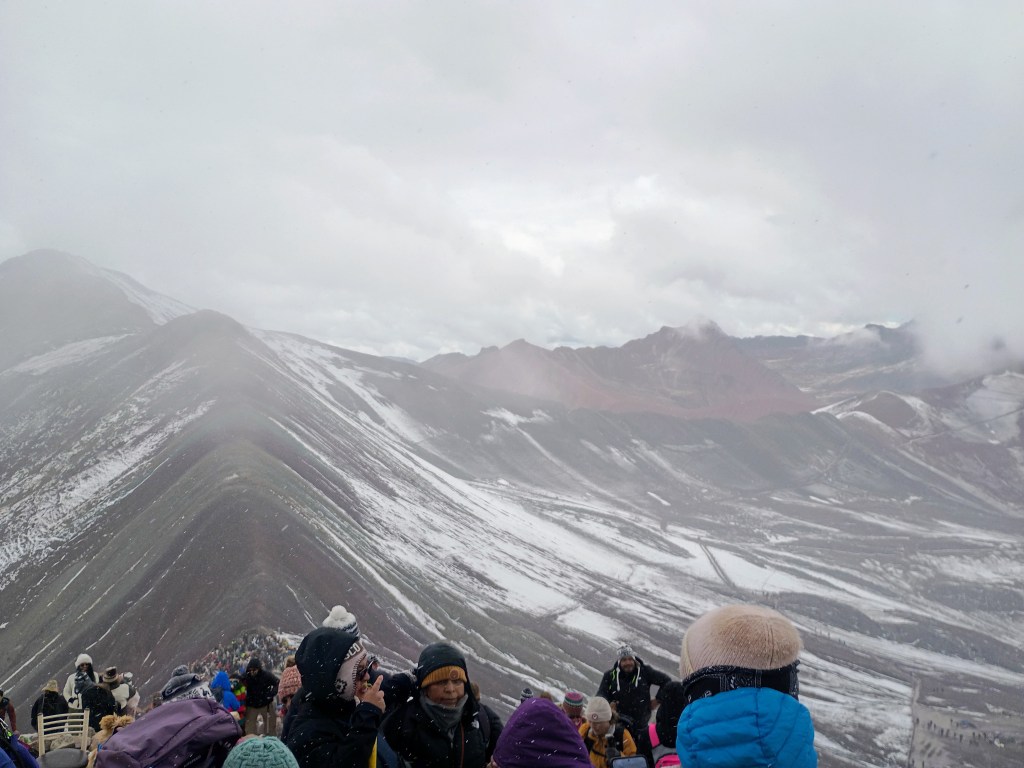
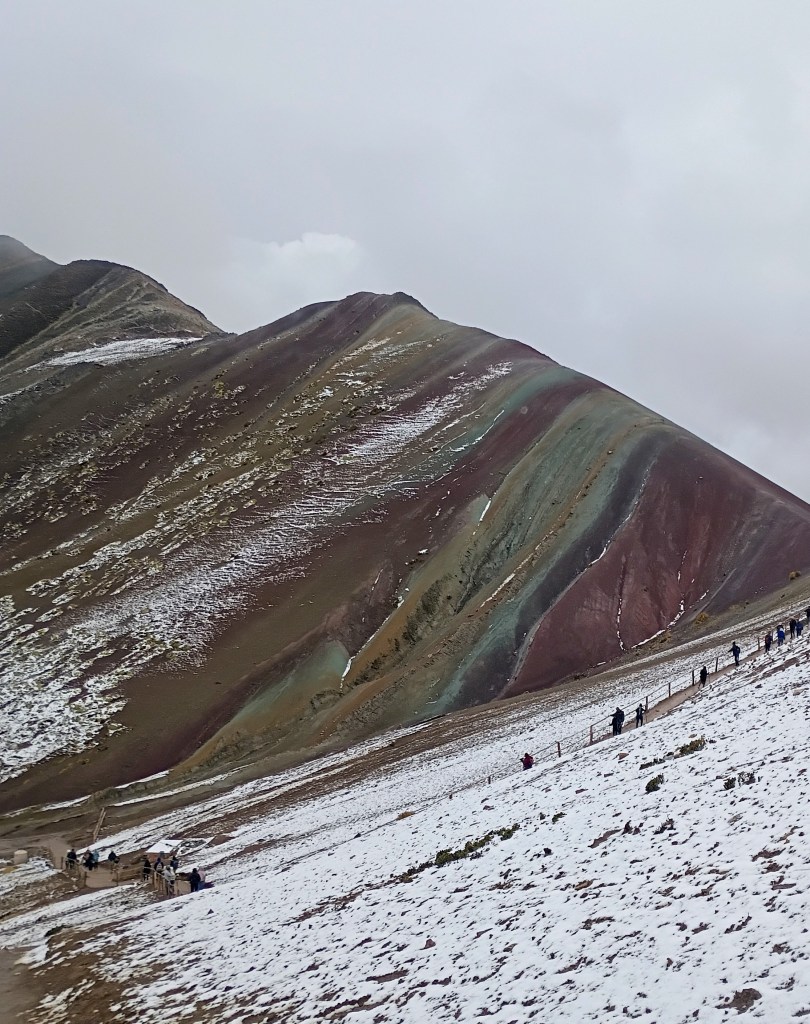
Rainbow Mountain: breakfast at an unreasonable hour
Eventually we made it back to Cusco late at night.
Then our alarms went off at about 3 a.m.
Because apparently sleep was not part of the itinerary.
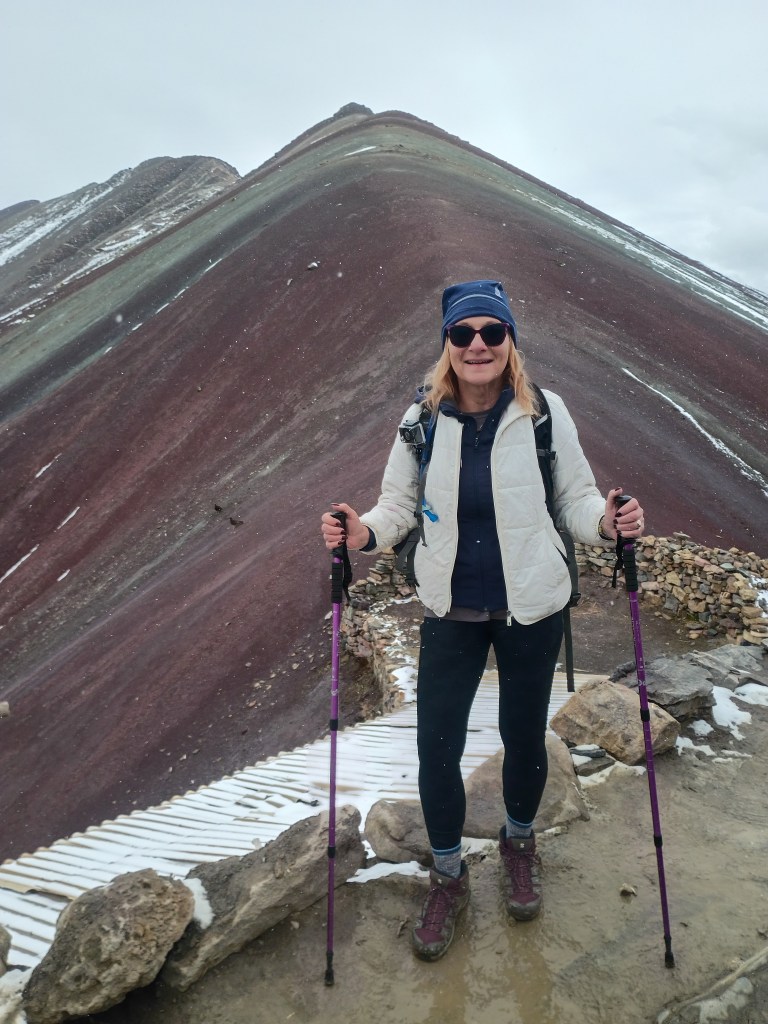
We had a three-hour drive each way to Rainbow Mountain, traveling through rural areas, small villages, farmland, livestock and some incredibly narrow dirt roads filled with tourist vans.
It was fascinating to watch the scenery change as we climbed higher.
And yes.
There was more high-altitude hiking.
By this point I think my lungs had simply accepted their fate.
And then there was Lima
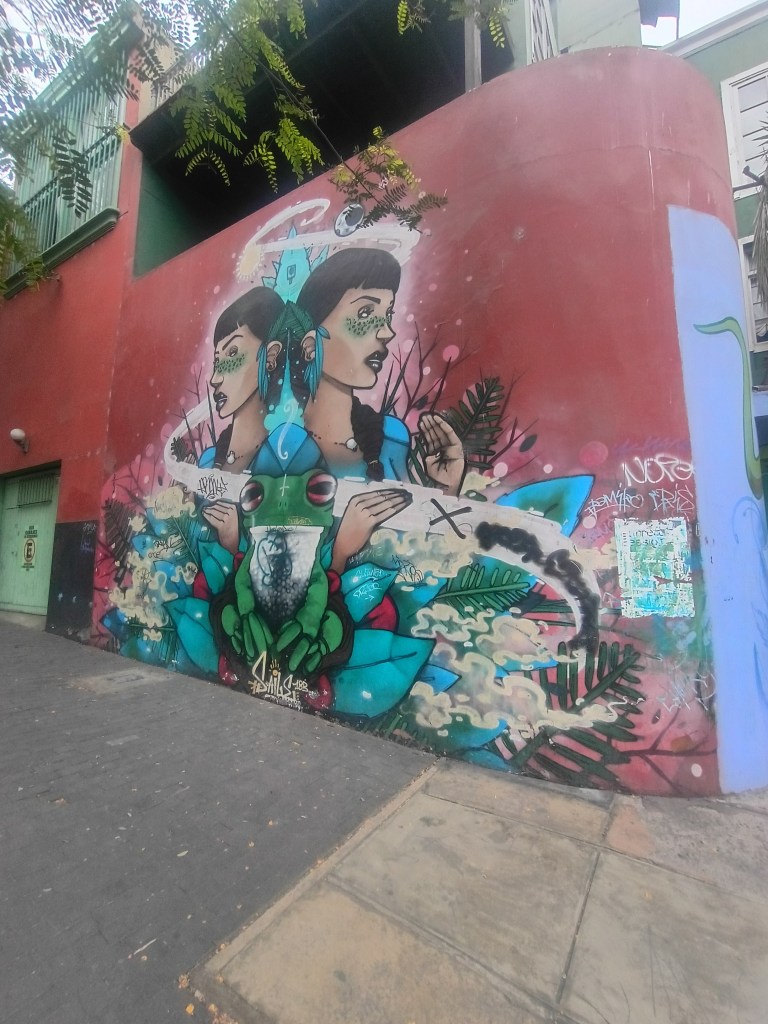
We ended the trip in Lima, and this was a completely different food experience.
After days in the Andes, Lima felt different in every way.
Ocean.
Cliffs.
Barranco.
Street art.
Restaurants.
Seafood.
Cocktails.
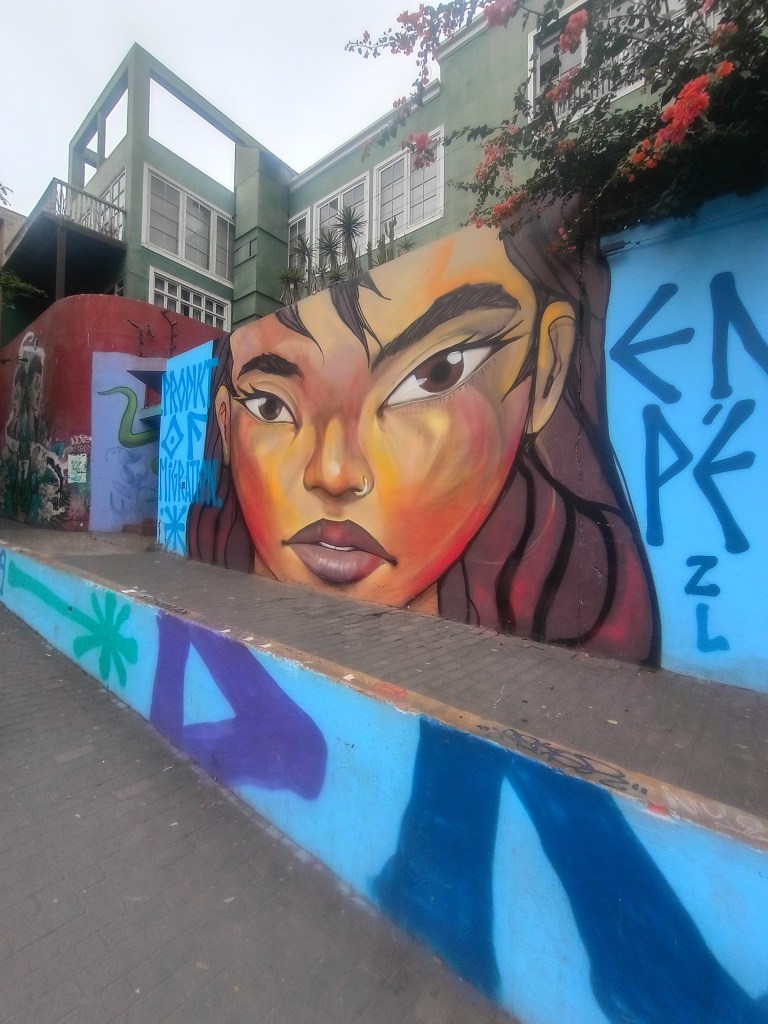
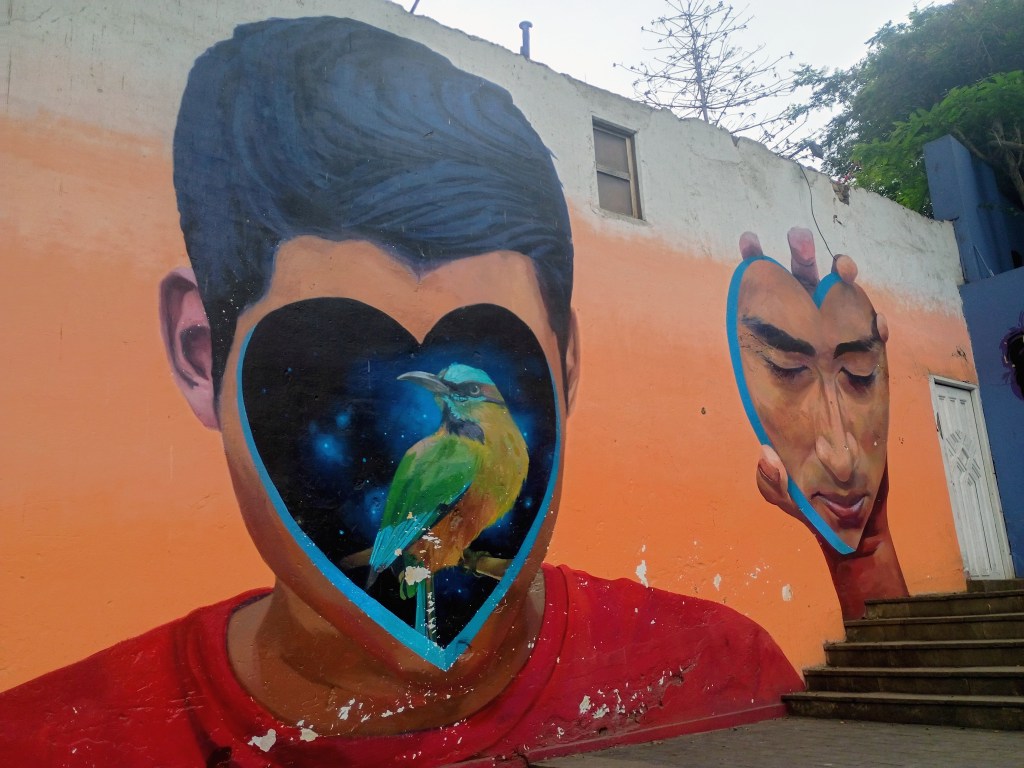
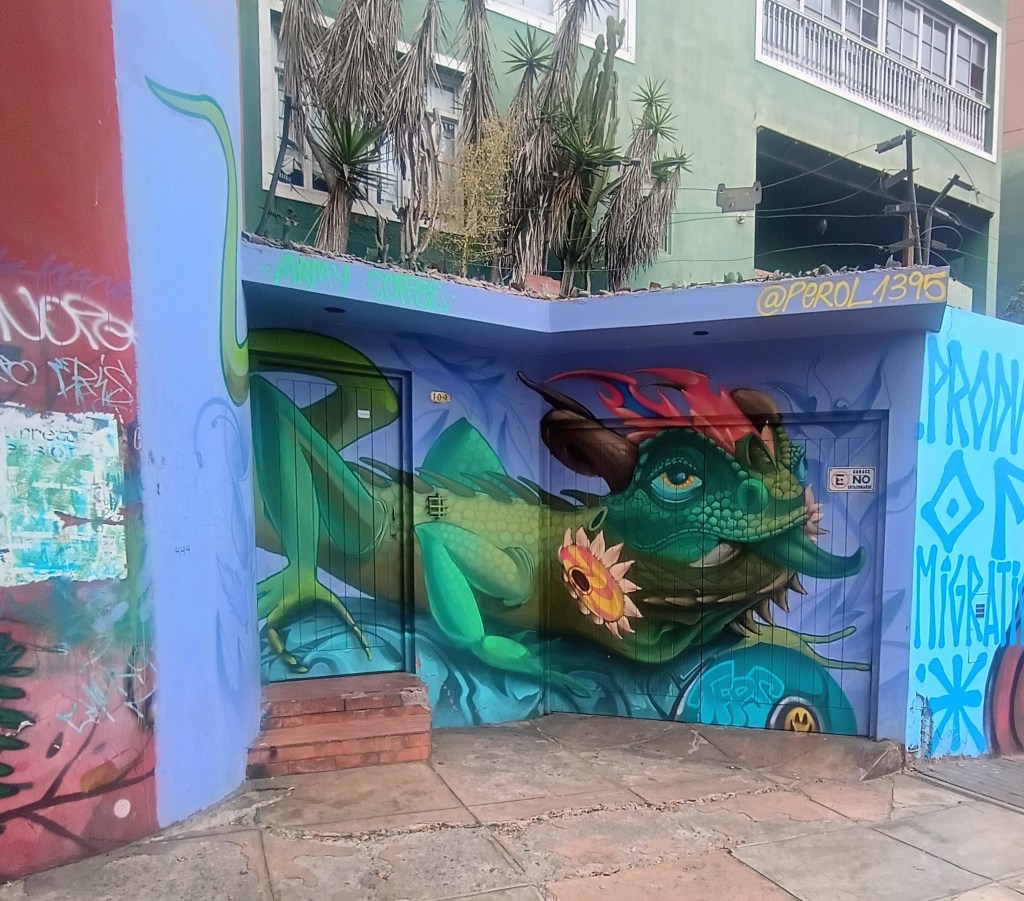
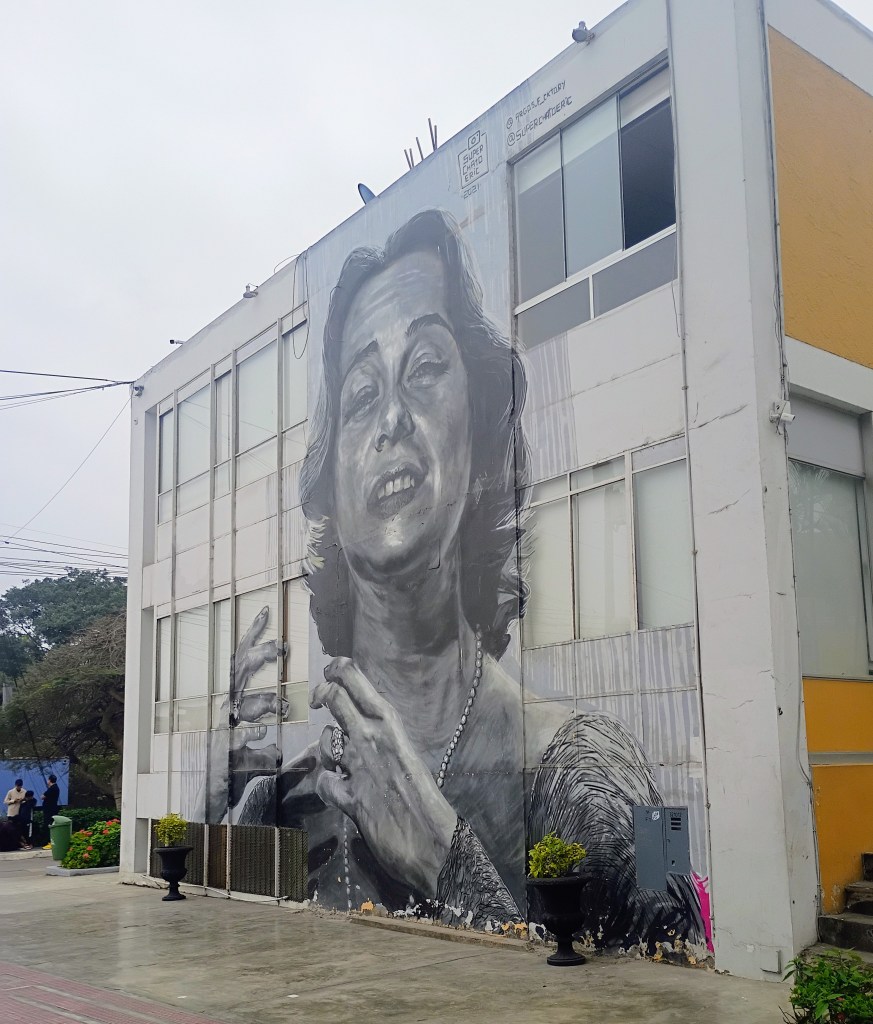
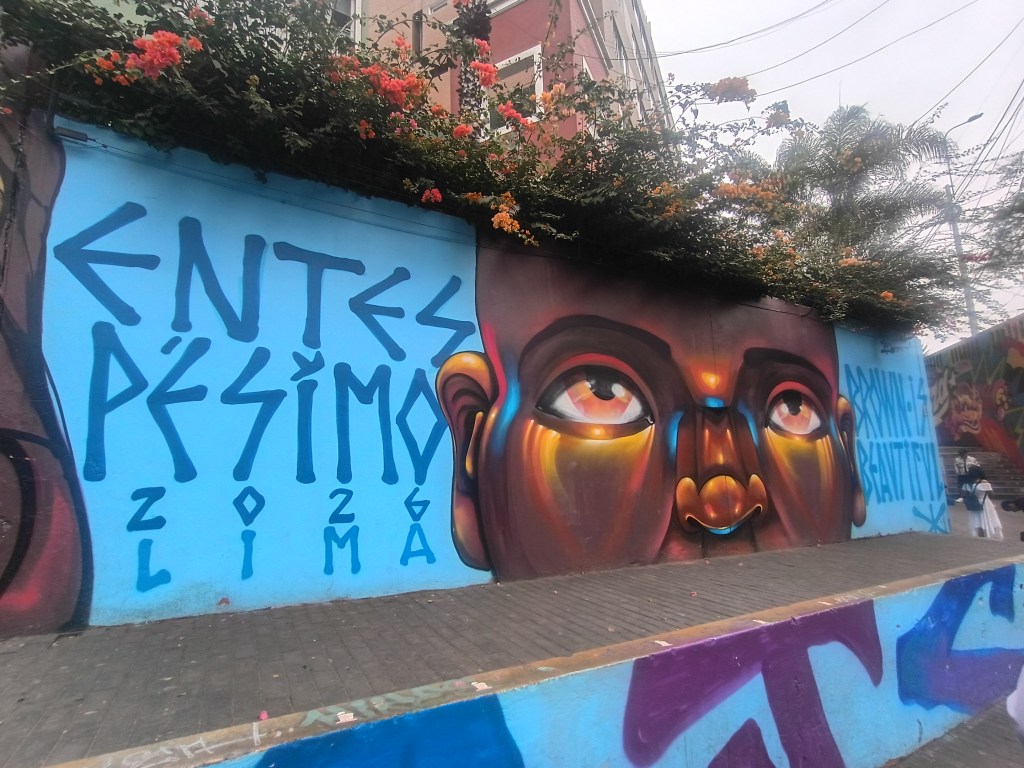
Peruvian food changes as you move from the mountains to the coast, and Lima was the perfect place to finish.
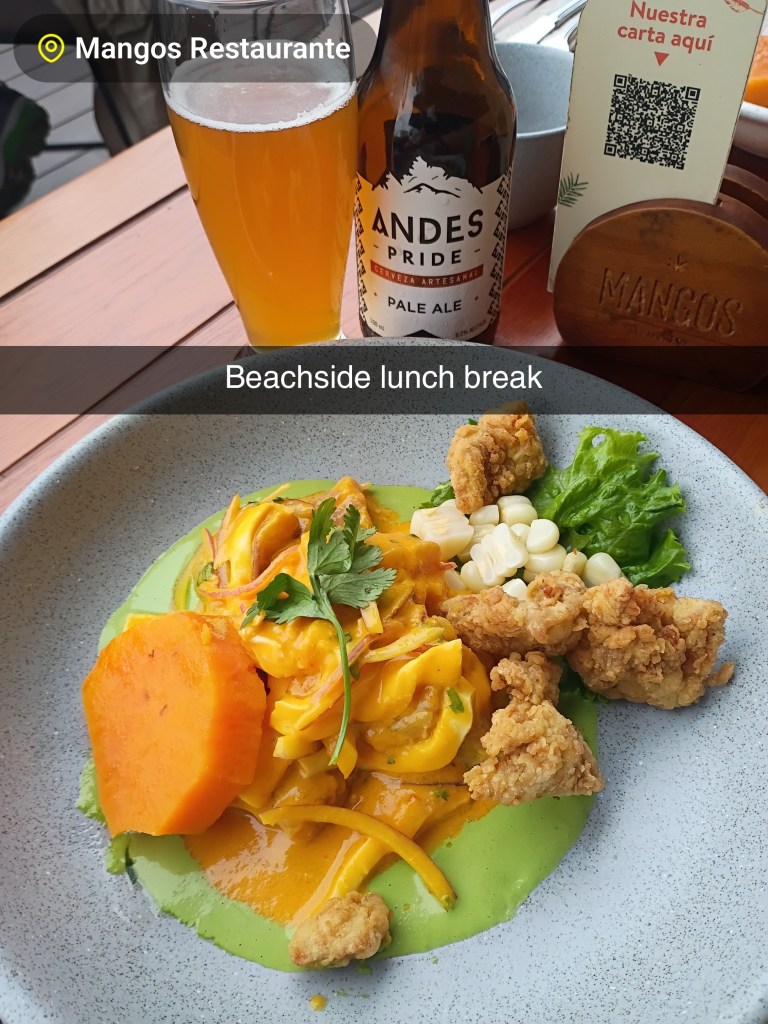
Ceviche was an obvious choice.
And one of the food highlights of the entire trip.
Fresh seafood, citrus, spice.
What’s not to love?
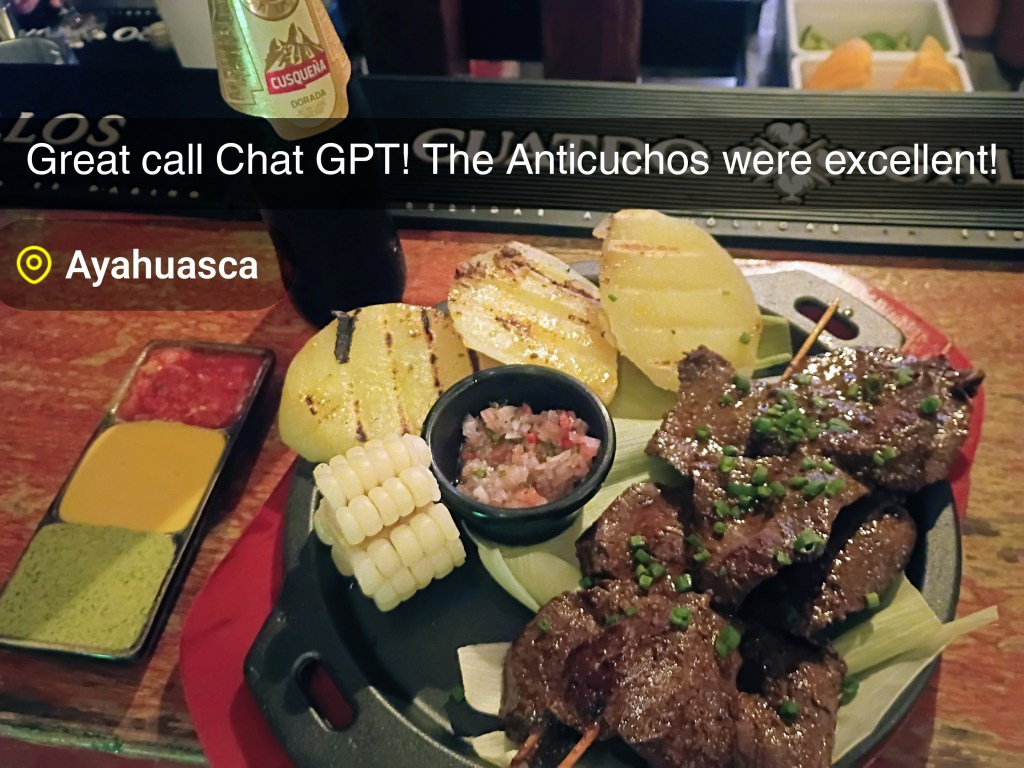
I also tried anticuchos, the grilled skewers that are a classic Peruvian street food.
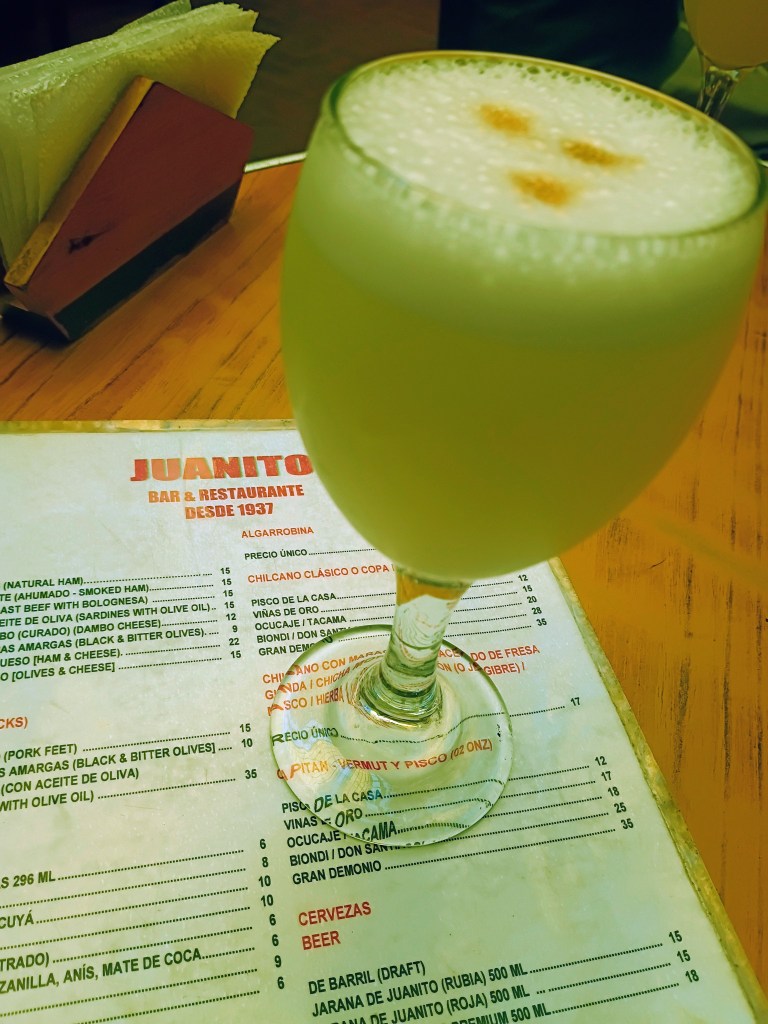
And of course there were more Pisco Sours.
At this point I had a responsibility to finish the research I had started in Cusco.
I had a flight later that night, but I was determined to squeeze as much food and drink out of Peru as possible before heading to the airport.
Then our flight was delayed.
Most people probably would have been annoyed.
My response was basically:
“Well…where else can we get a cocktail?”
There are worse travel problems to have.
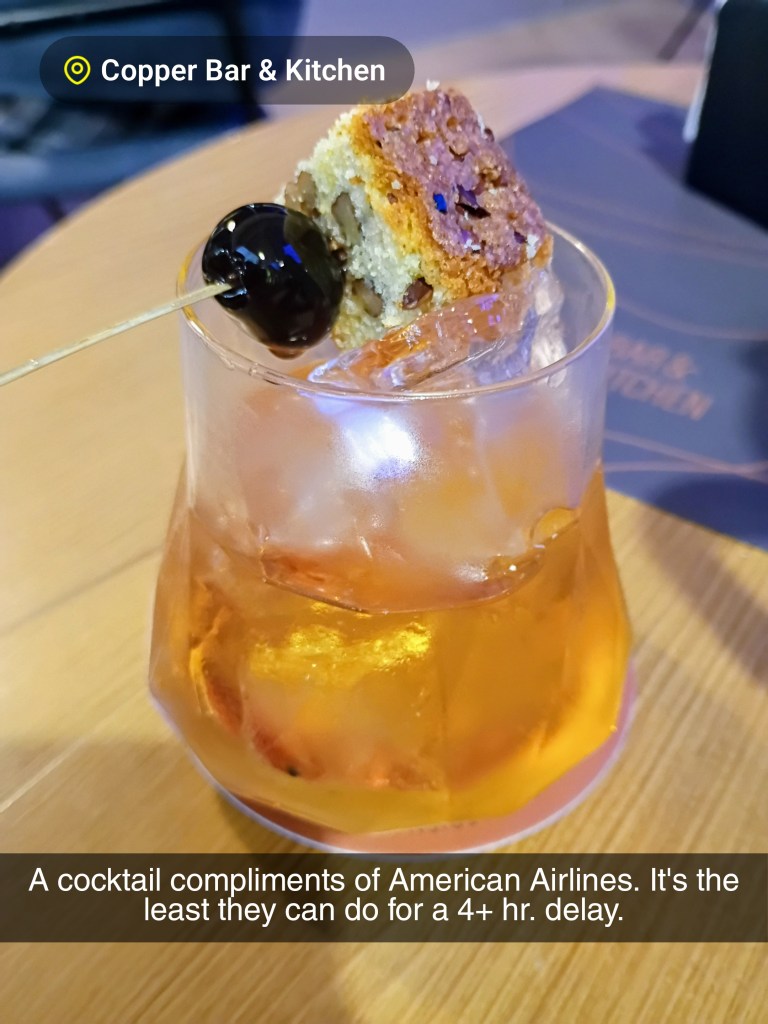
My completely unofficial Pisco Sour findings
After extensive field research, I can confirm one thing:
No two Pisco Sours were exactly alike.
Some were more tart.
Some were sweeter.
Some had a little more bite.
Some were creamier.
Some were simply better balanced.
And yes, I definitely had favorites.
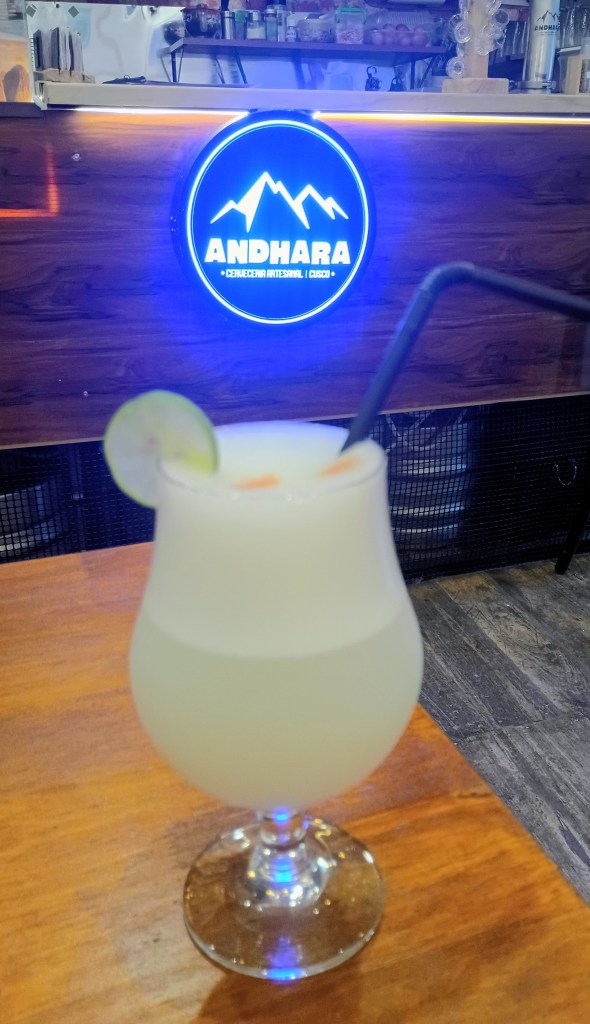
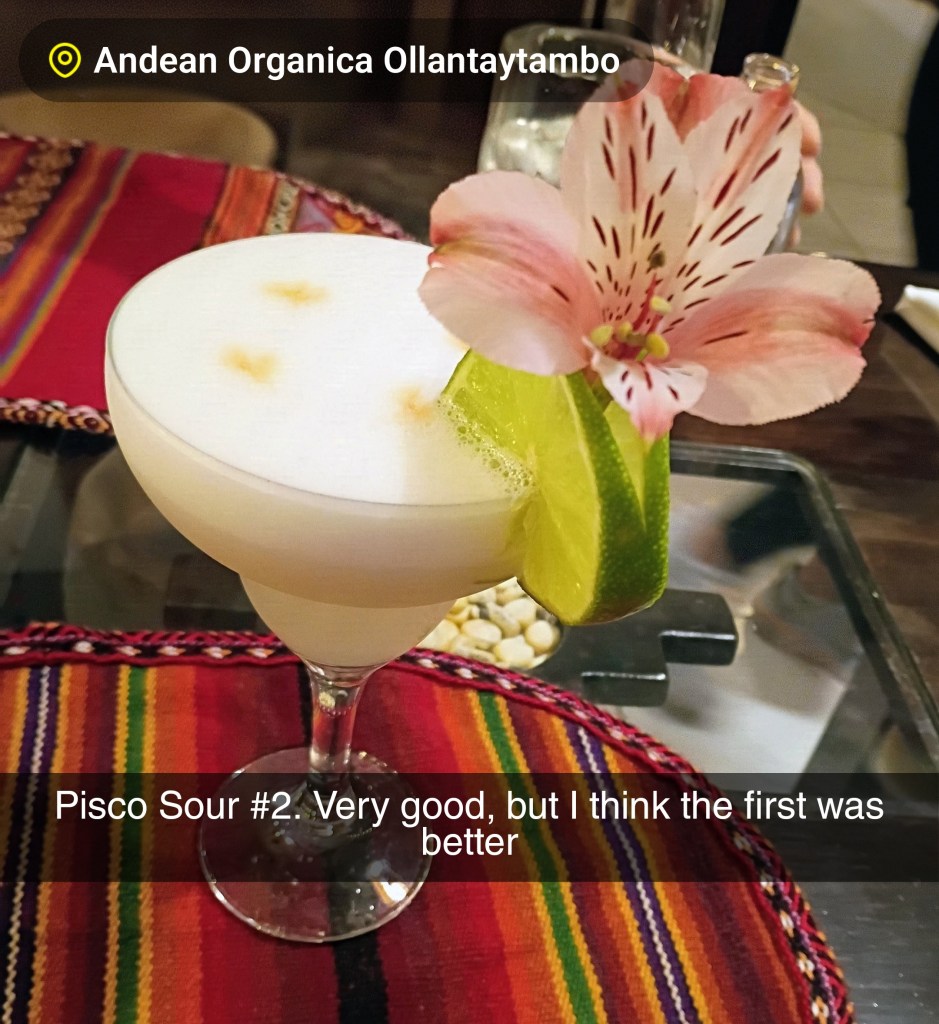
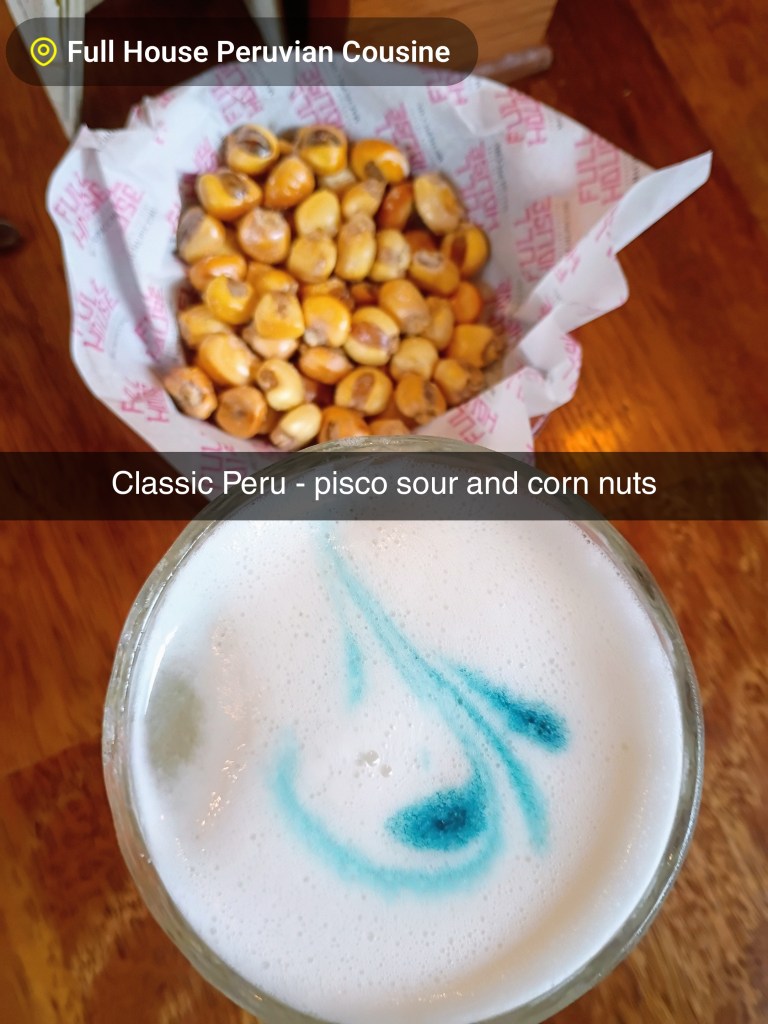
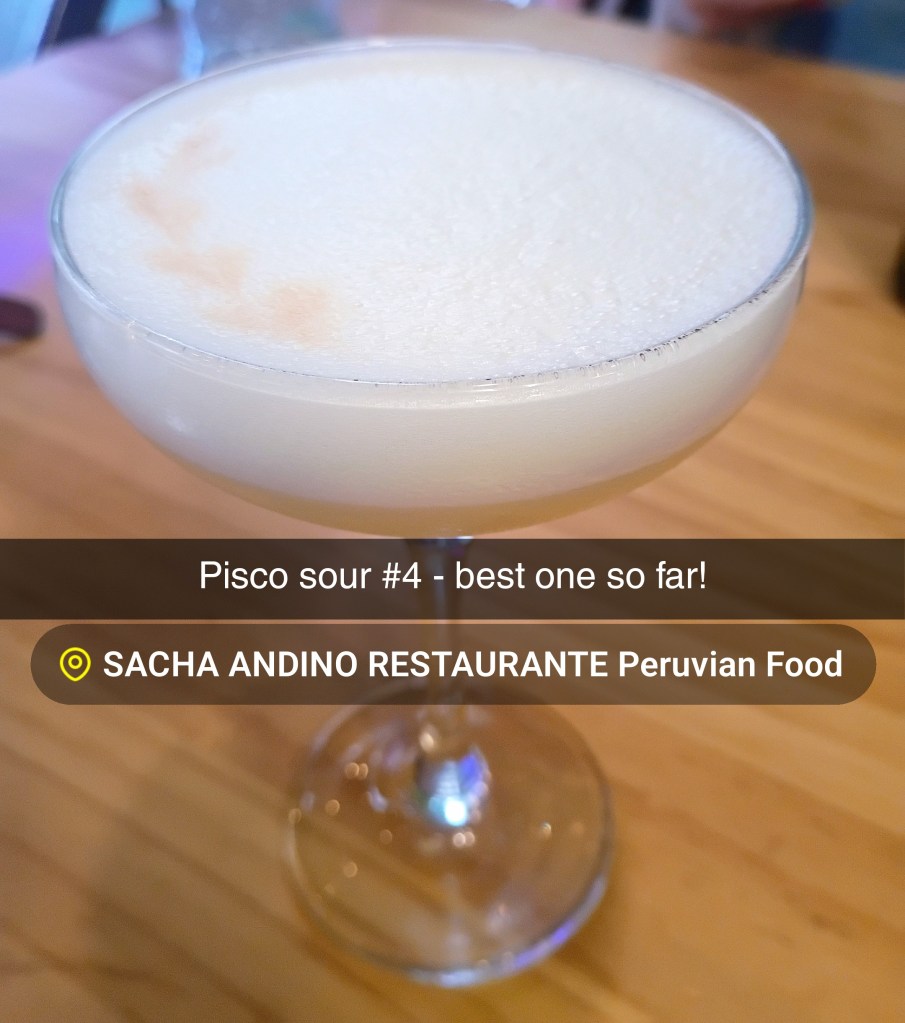
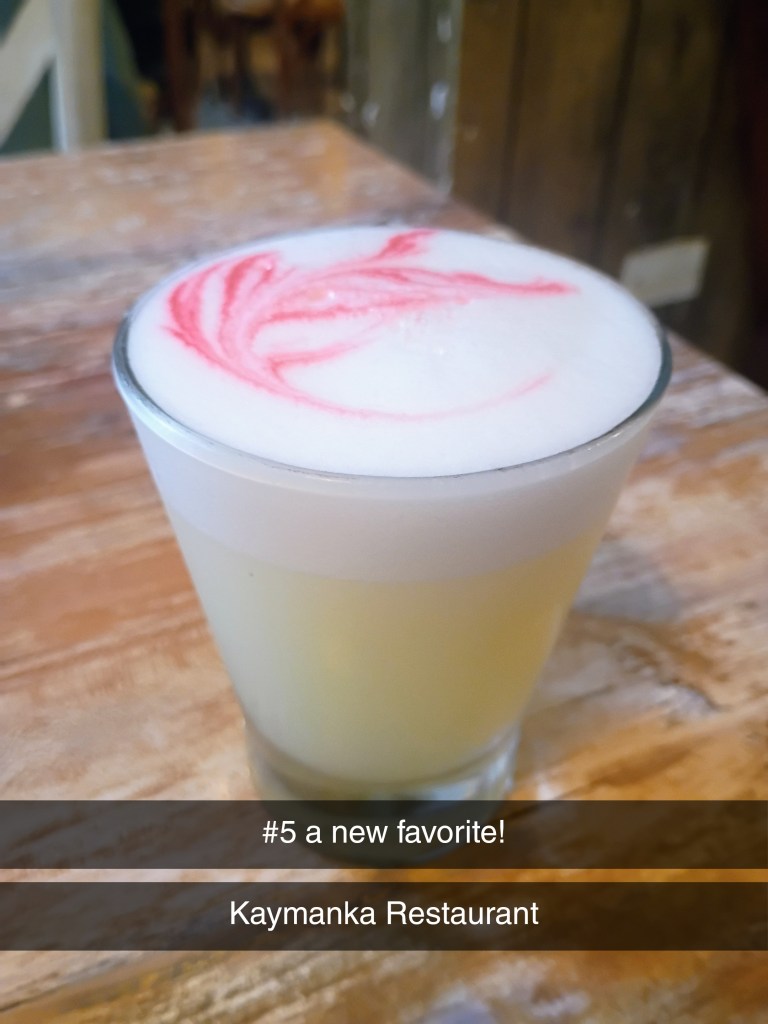
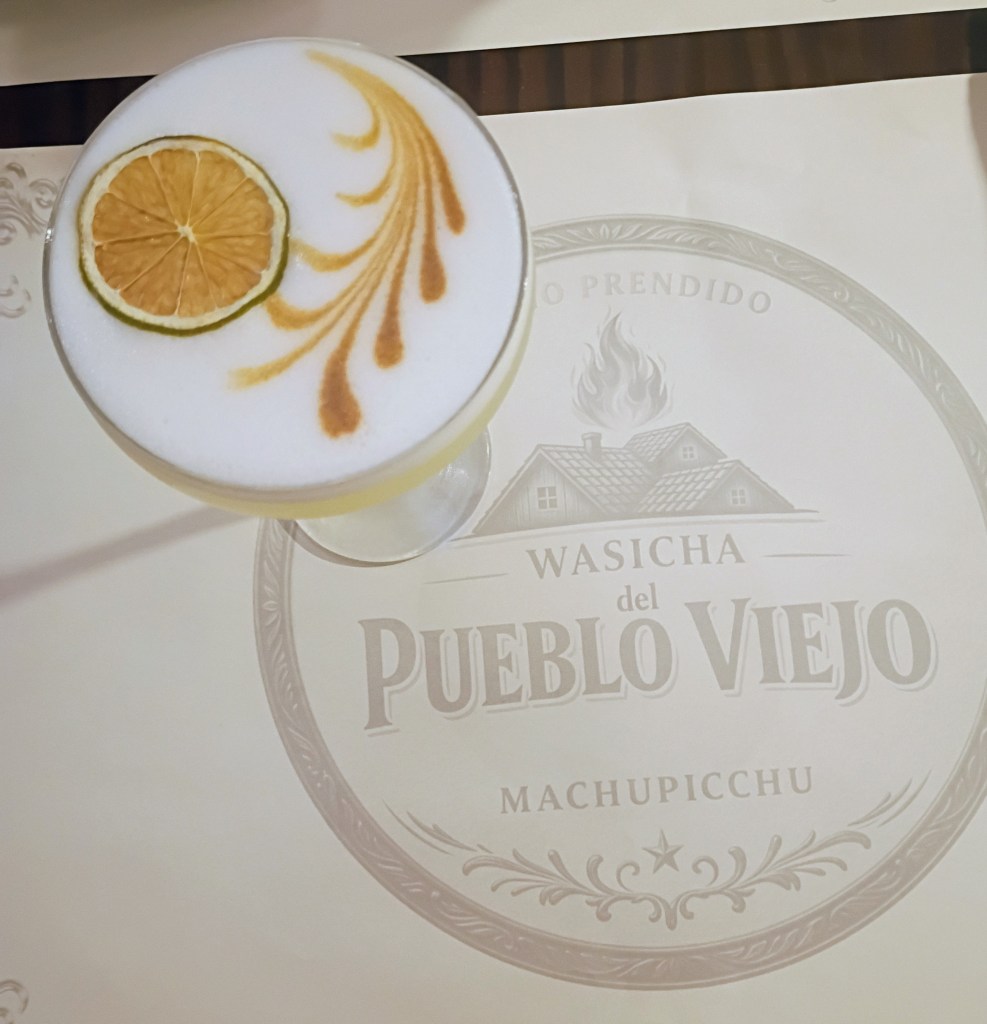
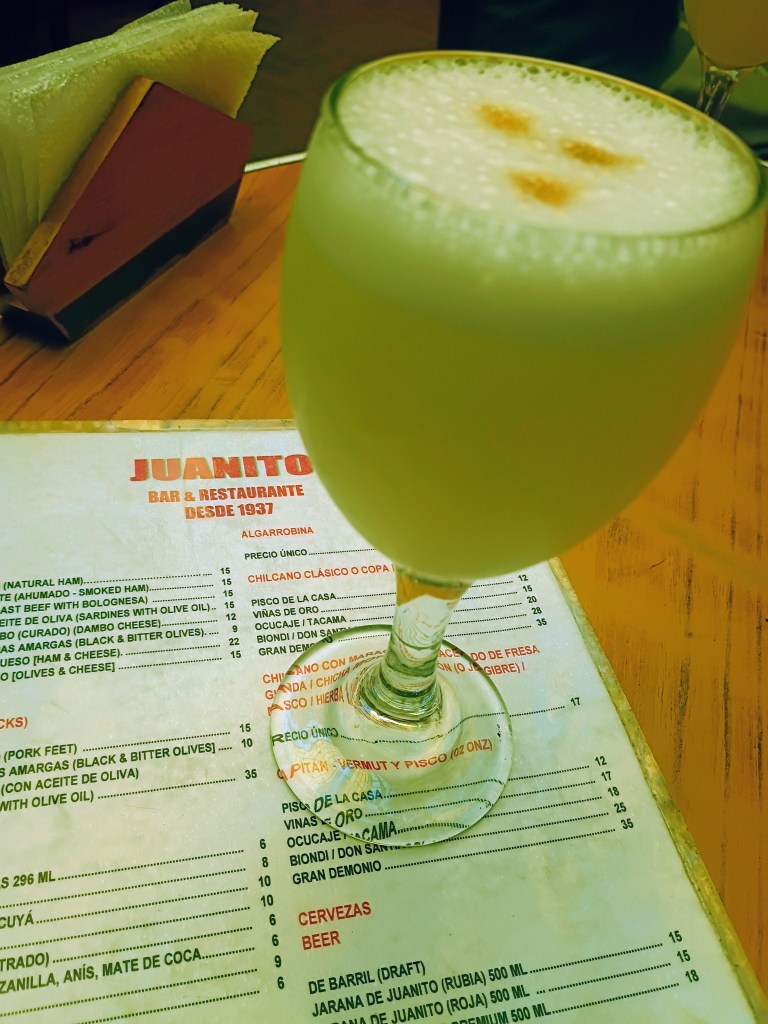
I’m glad I photographed and tagged so many because now I can actually remember which ones I preferred instead of relying on my memory after…well…multiple Pisco Sours.
This is why documentation is important.
So what was my favorite?
I hate this question.
Because I honestly don’t think I could choose just one thing.
Ceviche would be near the top.
Alpaca surprised me.
I would happily eat considerably more empanadas.
And after conducting as much field research as possible, I can confirm that I am definitely a fan of the Pisco Sour.
The markets fascinated me.
The seafood in Lima was fantastic.
The beautifully plated restaurant meals were wonderful.
But some of the meals I remember most were probably the ones served at camp after hours of hiking.
Context changes flavor.
A hot bowl of soup when you are cold, tired and hungry at 12,000 feet tastes very different from that same bowl of soup at home.
So does the first Pisco Sour after four days on the trail.
Trust me on this one.
Peru gave me plenty of memorable food.
But just like the rest of the trip, sometimes the best part wasn’t necessarily the thing I expected to remember.
It was the meal I was starving for.
The unfamiliar ingredient at a market.
An empanada eaten while exploring.
A steaming cup of coca tea handed through a tent door at 4 a.m.
The drink at the end of a difficult day.
The people sitting around the table with me.
And yes, occasionally the opportunity to eat an alpaca after spending the morning taking pictures of one.
Sorry, alpacas.
You’re adorable.
And delicious. 🙂
As for the guinea pig?
I still can’t say I regret passing.
But give me one more day in Peru and another Pisco Sour first…
I might have gotten there.

 ND2AZ Foodie